
 Open Access
Metaverse and Augmented Reality in E-Commerce: Bibliometric Analysis and Thematic Exploration


 View Full Article|
 Download PDF
Abstract:
This research addresses the rapid advancements and exponential growth in academic research on the use of augmented reality (AR) and the metaverse in e-commerce. Through comprehensive bibliometric analysis, the research evaluates the performance of publications and citation metrics, uncovers influential works and collaborative networks, and explores thematic trends and researcher sentiments in this domain. Data from Scopus was analyzed using tools such as R, RStudio, BiblioShiny, VOSviewer, Tableau, and Python. In addition, sentiment analysis was conducted via Hugging Face’s DistilBERT model. The research findings highlight key themes, including the integration of AR and the metaverse in retail, online shopping, and mobile commerce, emphasizing the role of immersive technologies in transforming consumer experiences. This study identifies emerging trends and gaps, providing a roadmap for future research and strategic implementation. Sentiment analysis reveals a balanced outlook among researchers, with both enthusiasm for technological advancements and concerns over implementation challenges. The research offers valuable insights for researchers, publications, and the e-commerce industry, guiding informed decision-making, fostering innovation, and enhancing consumer experiences in the evolving landscape of AR and the metaverse in e-commerce.1. Introduction
E-Commerce involves buying and selling goods and services over the internet, including online retailing, electronic markets, and auctions. It revolutionizes traditional trading with instant, global, and cost-effective transactions, improving supply chain management and supporting diverse payment methods (Garrett & Skevington, 1999). Augmented Reality (AR) enhances the e-commerce experience by allowing customers to virtually interact with products in a 3D environment, helping them visualize items in real-world settings before purchasing. This immersive technology improves decision-making, reduces returns, and increases customer engagement. AR has emerged to enhance real-world environments by overlaying digital information, integrating real and virtual objects into 3D space. AR aims to augment perception and interaction, including visual, auditory, and haptic elements, and provides transformative solutions in healthcare, entertainment, manufacturing and e-commerce (Carmigniani et al., 2011). Virtual Reality (VR), on the other hand, creates a fully immersive, computer-generated environment that replaces the real world entirely, often requiring headsets and controllers to interact with the virtual space (Burdea & Coiffet, 2024).
Metaverse, combining AR and VR with AI transforms e-commerce by creating immersive, interactive environments. Together, they revolutionize online shopping, offering innovative solutions, improving supply chain management, and enhancing user engagement and efficiency. AR enhances customer experience by overlaying digital information onto the real world, enabling users to visualize products in their space before purchasing. The metaverse offers dynamic virtual spaces for social interactions, virtual storefronts, and real-time commerce. Overall, the combined use of the Metaverse and AR in e-commerce offers unprecedented opportunities for personalization, convenience, and enhanced marketing strategies (Martínez-Gutiérrez et al., 2024).
Due to the rapid expansion of these technologies, researchers and publications frequently find it difficult to stay up with academic trends in the usage of AR and the metaverse in e-commerce. The academic world produces new ideas and hypotheses swiftly. Academic investigation and practical application suffer due to the dynamic nature of the metaverse and AR, which requires continuous experimentation and makes it challenging for scholars to track technological advancements and their implications for e-commerce transformation (Park & Kim, 2022). Furthermore, one of the biggest obstacles facing researchers is the lack of awareness regarding the influential works and emerging developments in metaverse- and AR-related e-commerce research (Shen et al., 2021). This gap can lead to fragmented knowledge, duplicated efforts, and delays in leveraging new opportunities or addressing emerging challenges shaped by these technologies.
The growing body of research spans a wide range of topics, including technological advancements in AR, the application of Metaverse in enhancing online shopping experiences, and the impact of these innovations on consumer behavior and business models. Bibliometric analysis offers a systematic approach to review these studies, helping to quantify and map the research landscape by identifying influential works, key trends, and leading contributors. Accordingly, this study not only provides a structured overview of existing literature related to Metaverse and Augmented Reality in E-Commerce but also highlights gaps and emerging opportunities in the field, guiding future research efforts to better understand how AR and Metaverse are revolutionizing e-commerce. Building on these gaps and the need for a clearer understanding of how AR and the metaverse are driving innovation and transforming e-commerce, this bibliometric analysis examines the field through the following focused research questions:
1. How has scholarly research on metaverse and augmented reality in e-commerce evolved in terms of publication performance, citation impact, and its contribution to innovation within the e-commerce landscape?
2. Which publications have the greatest influence in shaping technological innovation in e-commerce through AR and metaverse research, and how are these works interconnected through citation networks?
3. What dominant and emerging thematic areas characterize current academic discourse on AR and the metaverse in e-commerce, and how do these themes reflect innovation trends and technological transformation in the field?
4. How are researchers and institutions collaborating within this domain, and what co-authorship networks indicate leadership, knowledge diffusion, and innovation clusters?
5. What sentiment patterns—such as opportunity-driven vs. challenge-driven perspectives—emerge from scholarly writing on AR and the metaverse in e-commerce, and how do these sentiments relate to the broader discourse on innovation and implementation challenges?
2. Literature Review
Several significant findings have been reached by recent research looking at AR in various e-commerce industries. According to Hsu et al. (2024), impulsive purchasing in AR is prompted by interaction, authenticity, and vividness. This information can help developers improve user experiences and comprehend how impulsive buying habits are affected. Yoo (2023) investigates how customers react to AR when they shop for jewelry on a mobile device, highlighting the influence of attributes like media richness and interaction on the sense of presence and ensuing purchasing behavior. In contrast to standard websites, Chiang et al. (2022) find that somatosensory AR significantly increases consumer delight and firm intention. They attribute this to the significance of natural symbol sets and human touch. In their investigation of Indian perceptions of augmented reality-based e-commerce, Singh et al. (2023) talk about changes in customer behavior when it comes to online buying because of a number of variables, including worries about quality and trust.
Recent studies on AR in e-commerce show that interaction, authenticity, and vividness drive impulsive purchases, while social value, fit confidence, and immersion enhance AR makeup shopping. Media richness and interaction increase purchasing in mobile AR jewelry shopping. Somatosensory AR boosts consumer delight and firm intention compared to standard websites. Quality and trust concerns affect Indian consumers’ AR-based e-commerce behavior, providing insights to improve user experiences and understand impulsive buying habits. Sharma et al. (2022) discuss how AR, VR, and artificial intelligence (AI) create a non-linear customer journey that affects both younger and older consumers by transforming retail into immersive and engaging experiences. Shah (2023) highlights the potential of AR partnerships in online shopping to reduce the need for in-person product interaction. Nair et al. (2022) propose a framework for integrating VR into e-commerce to address concerns over product quality and fit. The study highlights how AR, VR, and AI are shifting retail from transactional to immersive experiences, influencing consumer behavior, decision-making, and engagement. These technologies offer opportunities for enhanced experience, effective marketing strategies, and the future transformation of online retail.
AR also gamifies grocery shopping by rewarding in-store visits, encouraging in-person interaction (Shoaib & Saleem, 2023). Big-box retailers use AR to boost consumer intent to buy, enhancing global brand perception (Riar et al., 2023). Technical capabilities like vividness and interactivity significantly impact consumers’ purchase intentions (Zimmermann et al., 2023). Making good use of augmented reality is crucial in the retail fashion sector. Interviews with designers and retailers highlight a readiness gap, emphasizing the need for efficiency in high-street retail and hedonic value in high-end AR settings. This study offers valuable insights for leveraging AR’s transformative potential in retail (Xue et al., 2023). In response to COVID-19, Barta et al. (2022) systematically review AR’s expanding role in shopping, synthesizing psychological and behavioral outcomes. The study presents a framework showing how AR enhances both utilitarian and hedonic shopping experiences, with features like interactivity and informativeness affecting consumer intentions to purchase, reuse AR apps, and recommend them. Jayaswal & Parida (2023) reviewed the increasing adoption of AR in electronic retailing (e-tailing), exploring conceptual foundations, methodologies, and key factors influencing AR usage. The paper highlights opportunities for more research and poses research questions as it examines the causes, obstacles, and effects of augmented reality in e-tailing. Table 1 highlights the limitations of the most recent related studies.
Study | Description | Limitation |
(Patil et al., 2021) | Discusses the emergence of metacommerce, a new form of e-commerce where shopping takes place in the immersive, virtual environments of the metaverse. The paper explores how advancements in VR, AR, and blockchain technology are transforming traditional e-commerce, providing consumers with more interactive, engaging, and personalized shopping experiences. | It overlooks significant barriers like the high cost of AR/VR hardware, limited accessibility, and the slow pace of technological integration. In addition, it lacks a thorough exploration of how consumers might behave in virtual environments, particularly in terms of trust, emotional attachment to virtual goods, and the overall shopping experience. Also, it lacks clearer guidance on how companies can navigate the technological, economic, and consumer behavior shifts required for success in the metaverse. |
(Huang & Chung, 2024) | Examined how AR experiences, particularly those incorporating somatosensory elements (related to the sense of touch), influence consumers' intention to stay on and return to online platforms. | It lacks consideration for long-term effects, and limited exploration of implementation challenges reduces its overall impact. |
(Idrees et al., 2023) | Explored how interactive virtual commerce tools, particularly in the fashion metaverse, help consumers purchase clothing that fits properly and meets their preferences. | More balanced perspective that includes consumer trust, behavior, and real-world examples would provide a more comprehensive understanding of the future of virtual fashion commerce. |
(Dethe & Joy, 2023) | Explored the impact of 3D visualization and AR on consumer behavior in online shopping environments. It aimed to determine how immersive, interactive features such as AR can influence shoppers’ purchasing decisions, engagement, and satisfaction compared to traditional 2D shopping interfaces. | More comprehensive analysis of how AR affects different product categories and demographic groups would provide a clearer picture of its impact on the future of online shopping. |
(Lavoye, 2023) | Reviewed literature on AR presence; proposed definitions for spatial, social, and self-presence; outlined a future research agenda for AR presence dimensions | Lack of research on social and self-presence in AR; need for a multidimensional perspective on presence dimensions’ impact on consumer behaviour. |
(Fici et al., 2024) | Explores how consumer behavior is influenced by the transition from traditional e-commerce platforms to the immersive experiences of the metaverse. The focus is on the application of neuroscience and cognitive psychology to understand how digital environments affect decision-making, emotional engagement, and purchasing behavior. | It could benefit from a more balanced and practical perspective. By incorporating empirical data, addressing individual differences, and engaging more critically with the ethical implications, the paper could provide a more robust and actionable framework for both researchers and businesses looking to understand consumer behavior in the metaverse. |
(Tariq, 2024) | Examines the evolving role of the metaverse in transforming business operations and commerce. It focuses on how businesses are leveraging the metaverse to create new commercial opportunities and business models. | It tends to focus on speculative opportunities rather than grounded, practical insights. There is a lack of focus on specific industries and consumer behavior. |
(Arya et al., 2023) | Offers a forward-thinking exploration of how AR and VR technologies within the metaverse could reshape the future of e-commerce. | There is no balanced analysis that takes into account the realistic challenges and limitations of these technologies. In addition, there is a need for a more comprehensive and grounded perspective on the democratization of e-commerce in the metaverse which incorporates more empirical evidence and provides practical recommendations for overcoming adoption barriers. |
(Morales et al., 2022) | Summarized the existing body of knowledge, highlight key findings, and identify research gaps in the application of these immersive technologies in online shopping environments. | There is a need for incorporating a more critical evaluation of the existing literature, analyzing the methodological rigor of the studies. Moreover, clearer and more actionable future research directions to better guide subsequent work in this field is necessary. |
The literature review reveals that integrating the Metaverse and AR into e-commerce is revolutionizing online shopping by creating immersive, interactive environments. Metaverse, enabled by AI, blockchain, and 5G, offers interconnected digital spaces for real-time interaction, while AR enhances user experiences by overlaying digital information onto the real world. Studies show that AR significantly impacts consumer behavior, driving engagement, satisfaction, and purchase intentions. Key factors include interactivity, authenticity, and visual appeal. Major retailers leverage AR for virtual product visualization, reducing returns and enhancing decision confidence. Overall, the combined use of Metaverse and AR in e-commerce offers unprecedented opportunities for personalization, convenience, and enhanced marketing strategies.
Despite the rapid growth of this research domain, several theoretical gaps remain unaddressed. First, existing studies rarely connect technological implementation with broader innovation frameworks explaining how AR and metaverse capabilities transform e-commerce ecosystems. Second, prior work often isolates technical, consumer-behavioural, and business-model perspectives rather than synthesizing them into a coherent understanding of the field’s intellectual evolution. Third, few studies systematically map influential authors, conceptual clusters, or thematic trajectories, limiting scholars’ ability to identify foundational theories, dominant paradigms, and emerging research frontiers. Finally, sentiment-oriented perspectives—such as researchers’ framing of opportunities versus challenges—are underexplored despite their relevance for understanding technology adoption narratives.
These gaps highlight the need for a comprehensive bibliometric analysis capable of tracing the intellectual development of AR and metaverse research in e-commerce, identifying influential works and collaboration networks, and revealing how the field has progressed from technical implementations toward consumer-centric innovation and business transformation.
3. Methodology
Bibliometric analysis systematically examines large scientific datasets to understand sector advancements and identify new patterns (Donthu et al., 2021). Unlike meta-analysis and systematic literature reviews, bibliometric analysis focuses on quantitatively evaluating publishing trends, citation trends, and authorship patterns (Aguinis et al., 2023). While systematic reviews organize and assess literature, and meta-analysis measures effects across studies (Palmatier et al., 2018), bibliometric analysis provides quantitative insights into publication patterns and scholarly impact, enhancing these methods.
Performance analysis and scientific mapping are the two primary pillars of the bibliometric analysis approach, and network analysis is a part of the enrichment technique. Science mapping explores the relationships between research parts, whereas performance analysis assesses the contributions to research. In essence, scientific mapping examines the relationships between research parts, whereas performance analysis evaluates the impact of those constituents. All the bibliometric analysis techniques are listed in Figure 1.
Performance analysis, a main technique in bibliometric research, identify the contributions of different organizations, countries, journals, and authors in a certain topic (Cobo et al., 2011). Several metrics are used, the main ones being the number of publications and citations per year or per constituent. Citations measure impact and influence; publications show productivity. Despite being descriptive, this analysis recognizes the importance of a variety of constituents in a field of study. On the other hand, science mapping explores the relationships between different components of research. The relationships between concepts and the general organization of scientific work are examined in this analysis. Co-authorship, co-citation, and other analysis methods can be employed to uncover the intellectual and structural components of an area of study. These techniques provide a thorough understanding of the dynamics and structure of a research topic when combined with network analysis (Chen, 2017).
To enhance bibliometric studies, network analysis can be applied through three paths: network metrics, clustering, and visualization. Deeper insights into the importance of research factors such as authors, institutions, and nations may be gained via network metrics, including PageRank and several measures of centrality (Andersen, 2021; Cisneros et al., 2018; Li et al., 2009). Clustering methods, including bibliographic coupling and co-citation analysis, create thematic groups that reveal research field developments (Zupic & Čater, 2015), utilizing techniques like hierarchical clustering and the Louvain method. Visualization tools, ranging from VOSviewer to R-based Bibliometrix, and software like Gephi, Pajek, and UCINET, provide graphical representations of data, each with unique features and development paces. Combining multiple tools often addresses specific limitations, optimizing the analysis process (Donthu et al., 2021).


Figure 2 offers a thorough bibliometric examination of articles on the use of AR and metaverse to e-commerce. It aims to assess scholarly impact, identify trends, and map research and author connections. By employing performance analysis, science mapping, and sentiment analysis, this framework will uncover key insights and emerging themes in this rapidly evolving field.
The process involves defining keywords for database searches, collecting bibliometric data, and cleaning it to ensure integrity. Bibliometric analysis encompasses performance and science mapping, assessing productivity, impact, and dissecting the intellectual landscape through various analyses. The study concludes with a comprehensive overview of bibliometric analysis on patterns, connections, and trends, providing insights into the evolving landscape and conducting sentiment analysis on abstracts to unveil prevailing attitudes within scholarly discourse. The goal of the structured research methodology depicted in Figure 3 is to gather, sift, analyze, and interpret bibliometric data in order to provide important context and trends for this field of study. The data collecting, data cleaning, data analysis, and results interpretation phases comprise the four steps of the approach.
In this stage, particular keywords and filters are used to extract primary data from Scopus. The collected data also contains contributor information such as authors, institutions, and countries, in addition to contribution data such as article titles, abstracts, keywords, citations, and references. Since this data is directly acquired from Scopus, it represents the original information obtained for analysis. Before data collection, it is essential to define the relevant keywords and filters to be used in the Scopus database. This ensures that the collected bibliometric data is accurate and relevant. Search terms such as “augmented reality,” “metaverse,” “e-commerce,” and “online shopping” guarantee accuracy and inclusiveness when locating pertinent material. These keywords are combined using Boolean operators to find articles that combine AR or metaverse concepts with e-commerce contexts. The complete Boolean search query used to identify relevant publications is provided as follows:
(“augmented reality” OR “AR” OR “metaverse”) AND (“e-commerce” OR “electronic commerce” OR “online shopping” OR “digital retail”)
Filtering is essential for refining bibliometric searches and collecting necessary bibliometric data. Only publications written in English were included to maintain accessibility and consistency. The search was also limited to journal articles that had reached their final publication stage, thereby excluding conference papers, reviews, book chapters, and in-press articles. These criteria ensured that the dataset consisted solely of peer-reviewed and fully indexed research outputs, avoiding unstable or incomplete metadata. The initial search generated 300 documents. After applying the language, document type, source type, publication stage filters, and relevance assessment, a final total of 101 documents remained. This refined dataset represents the core literature for bibliometric and thematic analysis.
Data cleaning is essential for ensuring the quality and reliability of datasets in research. Using Python in the Google Colab environment (refer to Appendix C for Python Code Snippets), researchers focus on eliminating duplicate entries and ensuring completeness in columns containing Digital Objective Identifier (DOI), title (TI), and author’s name (AU). Duplicate values in these columns indicate invalid documents, unfit for analysis. The script starts by loading the exported bibliometric data (bibliometrix_scopus.xlsx) into a DataFrame, then removes rows with missing values in specific columns, as missing values will be identified as duplicates too. Subsequently, it identifies duplicates based on DI, TI, and AU columns, calculating the number of duplicates in each category. Finally, it lists duplicate rows in the author column alongside their corresponding titles and document identifiers. There are duplicate rows found in AU, indicates documents with same authors but after identification with column TI and DI, the documents are not duplicated, and hence they do not need to be removed. In short, all data in original Scopus data file is maintained with no duplicates and missing values identified and ready to proceed for further analysis.
This phase employs two specialized software tools for bibliometric analysis: R for performance analysis and VOSviewer for science mapping. The R coding language, run in the RStudio environment, utilizes the Bibliometrix library package to run Biblioshiny graphical user interface to perform performance analysis, while VOSviewer, a standalone software, is used for science mapping. In order to undertake performance analysis and provide visual representations of knowledge progression, researchers input the refined data into these tools. Performance analysis uses the bibliometric data (bibliometrix_scopus.xlsx) to generate key publication and citation related metrics such as main information about the data, annual scientific production, average citations per year, most globally cited documents, most relevant sources, most relevant authors, most relevant affiliations, and country scientific production. The results are compiled into a report and exported as an Excel file, with each analysis arranged in separate sheets containing result tables and graphs. These graphs are then re-visualized using Tableau to include more detailed information, enhancing visualization and interpretation of the results. Using VOSviewer, Science Mapping loads the actual Scopus data (scopus.csv) to provide important metrics such as co-authorship, co-citation, bibliographic coupling, and citation analysis. VOSviewer creates a clustering network map for each analysis, and the results must be saved manually. Each result is saved as a CSV file and converted to an Excel file for tabulation. The results in the Excel file are combined with the original Scopus data information to create comprehensive results tables for each analysis, as shown and discussed in the results section.
To explore how researchers conceptually frame the use of the metaverse and augmented reality in e-commerce, we conducted an exploratory sentiment-oriented text analysis of scholarly abstracts. Our objective is to identify whether the literature tends to emphasize opportunities and benefits or challenges, limitations, and risks. A separate dataset (“scopus_sentiment.xlsx”) was prepared by extracting only the abstract column from the original Scopus export and assigning a unique identifier to each abstract. Sentiment analysis was performed in Google Colab using Python and the Hugging Face DistilBERT base uncased finetuned on SST-2 model. Although the SST-2 classifier is trained on non-academic texts, its labels (“positive” and “negative”) were used as proxy indicators of discursive orientation. In academic writing, statements describing challenges, constraints, unresolved issues, or methodological limitations are commonly labelled as “negative”, while descriptions of contributions, benefits, and opportunities are typically labelled as “positive”. This approach allows us to distinguish whether the field is framed more cautiously or more optimistically, while acknowledging that these labels do not reflect emotional sentiment.
To manage abstracts exceeding the model’s token limit, each text was automatically segmented into smaller chunks. Sentiment was computed for each chunk, and an aggregated label was generated for each abstract based on the majority classification. Sentiment scores and labels were appended to the dataset, producing the final file (“scopus_sentiment_with_results.xlsx”), which was subsequently used for visualization.
4. Analysis and Result
The bibliometric analysis of research on “The Use of Metaverse and Augmented Reality in E-Commerce” reveals a vibrant and rapidly growing field as seen in Table 2.
Description | |
Article | 101 |
Timespan | 2010–2024 |
Sources (journal, book, etc.) | 74 |
Documents | 101 |
Document average age | 3 |
Average citation per doc | 31.28 |
References | 6566 |
Annual growth rate % | 18.68 |
Keywords plus (ID) | 300 |
Authors keywords (DE) | 357 |
Authors | 295 |
Authors of single-authored docs | 995 |
Single-authored docs | 10 |
Co-authors per doc | 3.16 |
International co-authorship % | 28.71 |
Spanning 14 years (2010–2024), with 101 articles or documents across 74 diverse journals, the research demonstrates a robust and multidisciplinary interest. The high annual growth rate with 18.68% and the relatively young average age of 3 years documents indicate ongoing and dynamic research activity. With an impressive average of 31.28 citations per document, these studies are highly influential. The extensive number of 6566 references highlights the depth of scholarship in this area. The diverse range of keywords with 300 keywords plus and 357 author’s keywords, reflects the complexity and breadth of the field. Collaboration is a key feature, with 295 authors contributing, an average of 3.16 co-authors per document, and nearly 29% international co-authorship. This collaborative effort enhances the quality and global relevance of the research, indicating a well-established and impactful academic foundation.
The main information from performance analysis reveals a dynamic and growing field marked by extensive collaboration and high impact. The diverse publication sources and keywords show the research’s multidisciplinary nature. High citation rates underscore the studies’ influence, and significant domestic and international collaboration indicates a collective effort to address complex issues (Zhao et al., 2019). This vibrant and impactful research landscape suggests that the publications and authors are effectively advancing the topic of metaverse and augmented reality in e-commerce, positioning the field for continued innovation and growth. The annual scientific production results reveal a notable upward trend in publications related to metaverse and augmented reality in e-commerce as seen in Figure 4.
The sharp rise in publications—particularly from 2020 to 2022—reflects broader technological and socio-economic developments rather than a simple numerical increase. The COVID-19 pandemic accelerated digital transformation, driving businesses and researchers to explore immersive e-commerce solutions such as AR product trials and virtual shopping environments, which in turn spurred a surge in empirical and conceptual studies. At the same time, advancements in mobile AR frameworks (e.g., ARKit, ARCore), 5G connectivity, and GPU capabilities between 2018 and 2022 made AR more accessible and cost-effective, enabling wider research into applications such as virtual try-ons, AR advertising, and interactive product visualization. The 2022 peak also aligns with the global “metaverse boom,” fuelled by major industry announcements and investments that triggered heightened academic interest in speculative models and early empirical investigations. The subsequent decline in 2023–2024 likely reflects a post-hype stabilization phase, where research shifted toward more focused and domain-specific contributions, as well as potential publication lags that commonly affect the most recent years in bibliometric datasets. The results in Figure 5 showcase trend reveal a notable decline in average citations over time.
The high citation peaks observed between 2016 and 2019 correspond to foundational and early conceptual studies on AR in retail and immersive commerce, which, as first movers, became widely referenced and shaped subsequent research directions. Citation rates declined after 2020 largely due to rapid field expansion, where the growing volume of publications caused citations to disperse across a broader set of papers rather than concentrate on a few influential works. From 2021 onward, research diversified into multiple directions—including VR-based metaverse experiences, blockchain-supported transactions, AI-driven personalization, and virtual social interaction—further distributing citations across emerging subtopics and reducing average citation counts. The sharp drop in 2023–2024 is typical of bibliometric datasets, as recently published articles have had limited time to accumulate citations, reflecting citation lag rather than diminished impact.
Figure 6a lists the top 10 most globally cited documents related to the research topic. These documents represent significant contributions to the field, as evidenced by their high citation counts. Notably, the document by Rese et al. (2017) from Technological Forecasting and Social Change tops the list with 261 citations, indicating its substantial impact on the research community. Other prominent documents include those by Steinhoff et al. (2019) in the Journal of the Academy of Marketing Science, Park & Yoo (2020) in the Journal of Retailing and Consumer Services, and Poushneh (2018) also in the Journal of Retailing and Consumer Services, highlighting the interdisciplinary nature of research on this topic. These highly cited documents likely offer valuable insights and frameworks for understanding the role of Metaverse and Augmented Reality in E-commerce, contributing significantly to the advancement of scholarship in this area. The provided Figure 6b outlines the top 10 most relevant sources for research.
The Journal of Retailing and Consumer Services emerges as the most prominent source, with 9 articles contributing to the discourse on this subject. This indicates the significant attention this topic receives within the domain of retail and consumer services. Additionally, the Journal of Research in Interactive Marketing and the Journal of Business Research demonstrate substantial relevance, with 4 articles each. Additionally, a variety of other journals such as Computers in Human Behavior, Asia Pacific Journal of Marketing and Logistics, Internet Research and four more sources also feature prominently. These findings suggest a strong presence of interdisciplinary research, drawing from fields such as marketing, e-commerce, and information management, reflecting the multi-faceted nature of exploring Metaverse and Augmented Reality in E-commerce. Figure 6c presents the top 10 most relevant authors in research.
Topping the list is Huang T-L with 5 articles, indicating a significant contribution to the field and a strong focus on this subject matter. Following Huang are authors such as Yoo J and Chung HFL, each with 3 articles, demonstrating their substantial involvement in advancing understanding within this research domain. The presence of multiple authors with 2 articles underscores the collaborative nature of research on this topic, with individuals like Jiang Q, Ivanov A, Gurrea R, Gu C, Flavián C, Brito PQ, and Barta S each making noteworthy contributions to the discourse. These authors collectively enrich literature and drive progress in exploring the intersection of Metaverse, Augmented Reality, and E-commerce. Figure 6d highlights the top 10 most relevant affiliations in research.
Leading the list is the University of Amsterdam with 9 articles, indicating its prominent role in producing scholarship on this subject, followed by the National University of Singapore with 7 articles. These institutions, alongside the University of Zaragoza, University of Colorado, and Waseda University, contribute significantly to the advancement of knowledge in this area with 6 articles each. Additionally, institutions like Universidade do Porto and the Tampere University with 5 articles each, followed by Shanghai Jiao Tong University, Jiangnan University, and Information Technology Bharati Vidyapeeth’s College of Engg with 4 articles each, also make notable contributions. These affiliations reflect a diverse range of academic centers engaged in research on the intersection of Metaverse, Augmented Reality, and E-commerce. The presence of multiple affiliations with four or more articles underscores the collaborative effort and international scope of research endeavors in this field.
China leads the pack with 46 publications, indicating a significant focus and contribution from Chinese researchers in this field. The USA closely follows with 42 publications, highlighting its strong presence and active engagement in exploring this topic. India, Germany, and the UK also demonstrate notable involvement with 24, 20, and 18 publications, respectively. Additionally, countries like Indonesia, Malaysia, South Korea, and Australia contribute substantially to the scientific discourse on this subject. The diversity of countries represented in the top 10 highlights the global interest and collaborative efforts in understanding the implications of Metaverse and Augmented Reality on E-commerce. The global map in Figure 7 illustrates the top 10 countries in scientific production regarding the research topic.
In summary, the performance analysis of research reveals a vibrant field, spanning 14 years with 101 documents across 74 journals. Collaboration is robust, with 295 authors contributing, and citation rates are high, averaging 31.28 citations per document. However, there is a decline in average citations after 2019, suggesting potential shifts in research focus. The top 10 cited documents and sources highlight significant contributions, while the top authors and affiliations underscore collaborative efforts. Globally, China leads in scientific production, reflecting widespread interest in exploring these technologies’ implications for e-commerce.
The citation analysis in Table 3 identifies key clusters and influential publications.
Publications | Number of Documents | Average Citations |
Cluster 1 | ||
journal of business research | 4 | 65.25 |
journal of retailing and consumer services | 9 | 53.22 |
Cluster 2 | ||
journal of research in interactive marketing | 4 | 11.25 |
Cluster 1, comprising journals like the Journal of Business Research and the Journal of Retailing and Consumer Services, emerges as the most impactful group with an average of 65.25 and 53.22 citations per document, respectively. This indicates these publications are highly regarded and frequently referenced in the academic discourse surrounding metaverse and augmented reality in e-commerce. Cluster 2, represented by the Journal of Research in Interactive Marketing, displays a lower average citation count of 11.25, suggesting its emerging but growing influence in the field. The high citation averages in Cluster 1 highlight the foundational and pioneering nature of the research published in these journals, establishing them as central to ongoing academic conversations. This mapping underscores the pivotal role of certain publications and journals in advancing the field, guiding future research directions and collaborations.
The co-citation analysis in Table 4 reveals distinct clusters of influential publications and their interrelationships, highlighting key contributions to the field.
Cluster 1 includes highly cited works such as Hilken et al. (2017) with 17 citations, focusing on the strategic potential of AR in enhancing online service experiences. This cluster underscores the leading role of AR in transforming digital customer interactions. Rauschnabel et al. (2019) and McLean & Wilson (2019) further support this with their studies on mobile AR apps’ impact on branding and customer engagement, cited 13 and 10 times, respectively. Cluster 2 features Kim and Forsythe’s 2008 research on virtual try-on technology with 15 citations, indicating its foundational influence on e-commerce and AR integration. Scholz & Duffy (2018) and Dacko (2017) contribute additional insights into AR’s reshaping of mobile marketing and smart retail settings, cited 11 and 10 times, respectively.
Cluster 3 highlights seminal works on the theoretical underpinnings of AR, such as Azuma’s 1997 survey on AR with 9 citations, and more recent studies by Park & Yoo (2020) and Rauschnabel et al. (2018), which explored consumer responses and privacy risks in AR adoption, cited 8 and 7 times, respectively. Cluster 4 includes foundational psychological and theoretical frameworks like study on environmental psychology (Mehrabian & Russell, 1974) and study on psychometric theory (Nunnally, 1978), each with 8 citations. Merle et al. (2012) also contributed to virtual try-on’s influence on consumer responses, indicating an interdisciplinary approach combining psychology and technology.
The co-citation patterns reveal a network of interlinked research that collectively advances understanding in the field, with certain key publications serving as pivotal references that shape subsequent studies (Öberg, 2023). This mapping underscores the interconnectedness of research efforts and highlights the significant contributions of specific works in advancing the integration of AR and metaverse technologies in e-commerce.
Cluster(s) and Year | Article | Source | Citations | References |
Cluster 1 | ||||
Hilken et al. (2017) | Augmenting the eye of the beholder: exploring the strategic potential of augmented reality to enhance online service experiences | Journal of the academy of marketing science | 17 | Hilken, T., de Ruyter, C., Chylinski, M., Mahr, D., & Keeling, D. I. (2017). Augmenting the eye of the beholder: exploring the strategic potential of augmented reality to enhance online service experiences. Journal of the Academy of Marketing Science, 45, 884–905. |
Rauschnabel et al. (2019) | Augmented reality marketing: how mobile AR-apps can improve brands through inspiration | Journal of retailing and consumer services | 13 | Rauschnabel, P. A., Felix, R., & Hinsch, C. (2019). Augmented reality marketing: how mobile AR-apps can improve brands through inspiration. Journal of Retailing and Consumer Services, 49, 43–53. |
McLean & Wilson (2019) | Shopping in the digital world: examining customer engagement through augmented reality mobile applications | Computers in human behavior | 10 | McLean, G., & Wilson, A. (2019). Shopping in the digital world: examining customer engagement through augmented reality mobile applications. Computers in Human Behavior, 101, 210–224. |
Cluster 2 | ||||
Kim & Forsythe (2008) | Adoption of virtual try-on technology for online apparel shopping | Journal of interactive marketing | 15 | Kim, J., & Forsythe, S. (2008). Adoption of virtual try-on technology for online apparel shopping. Journal of Interactive Marketing, 22(2), 45–59. |
Scholz & Duffy (2018) | We are at home: how augmented reality reshapes mobile marketing and consumer-brand relationships | Journal of retailing and consumer services | 11 | Scholz, J., & Duffy, K. (2018). We Are at Home: How augmented reality reshapes mobile marketing and consumer-brand relationships. Journal of Retailing and Consumer Services, 44, 11–23. |
Dacko (2017) | Enabling smart retail settings via mobile augmented reality shopping apps | Technological forecasting and social change | 10 | Dacko, S. G. (2017). Enabling smart retail settings via mobile augmented reality shopping apps. Technological forecasting and social change, 124, 243–256. |
Cluster 3 | ||||
Azuma (1997) | A survey of augmented reality. | Presence: Teleoperators and Virtual Environments | 9 | Azuma, R. T. (1997). A Survey of Augmented Reality. A Survey of Augmented Reality, Presence: Teleoperators and Virtual Environments, 6(4), 355–385. |
Park & Yoo (2020) | Effects of perceived interactivity of augmented reality on consumer responses: a mental imagery perspective | Journal of retailing and consumer services | 8 | Park, M., & Yoo, J. (2020). Effects of perceived interactivity of augmented reality on consumer responses: A mental imagery perspective. Journal of Retailing and Consumer Services, 52, 101912. |
Rauschnabel et al. (2018) | Antecedents to the adoption of augmented reality smart glasses: a closer look at privacy risks | Journal of business research | 7 | Rauschnabel, P. A., He, J., & Ro, Y. K. (2018). Antecedents to the adoption of augmented reality smart glasses: a closer look at privacy risks. Journal of Business Research, 92, 374–384. |
Cluster 4 | ||||
Mehrabian & Russell (1974) | An approach to environmental psychology | the MIT Press | 8 | Mehrabian, A., & Russell, J. A. (1974). An approach to environmental psychology. the MIT Press. |
Merle et al. (2012) | Whether and how virtual try-on influences consumer responses to an apparel web site | International journal of electronic commerce | 8 | Merle, A., Senecal, S., & St-Onge, A. (2012). Whether and how virtual try-on influences consumer responses to an apparel web site. International Journal of Electronic Commerce, 16(3), 41–64. |
Nunnally (1978) | Psychometric theory | 8 | Azuma, R. T. (1997). A Survey of Augmented Reality. A Survey of Augmented Reality, Presence: Teleoperators and Virtual Environments, 6(4), 355–385. (Note: This reference seems misplaced/incorrect for "Psychometric theory" based on common knowledge. It appears to be a repeat of Azuma 1997. Please verify if this reference is correct for Nunnaly J.C.) | |
The bibliographic coupling analysis of research in Table 5 identifies several clusters, each highlighting different themes and topics, as well as their interrelationships. For the Bibliographic Coupling Map refer to Appendix A.
Author (year) | Article | Source | Citations |
Bibliographic coupling cluster 1: Augmented Reality Applications in Retail and E-Commerce (20 articles) | |||
Poushneh (2018) | Augmented reality in retail: a trade-off between user’s control of access to personal information and augmentation quality | Journal of retailing and consumer services | 147 |
Ahn et al. (2015) | Supporting healthy grocery shopping via mobile augmented reality | ACM transactions on multimedia computing, communications and applications | 74 |
Yaoyuneyong et al. (2014) | Factors impacting the efficacy of augmented reality virtual dressing room technology as a tool for online visual merchandising | Journal of global fashion marketing | 50 |
Bibliographic coupling cluster 2: Augmented Reality in Shopping and Retailing (19 articles) | |||
Smink et al. (2020) | Shopping in augmented reality: the effects of spatial presence, personalization and intrusiveness on app and brand responses | Journal of business research | 124 |
Hilken et al. (2020) | Seeing eye to eye: social augmented reality and shared decision making in the online marketplace | Journal of the academy of marketing science | 72 |
Huang et al. (2019) | Enhancing online rapport experience via augmented reality | Journal of services marketing | 46 |
Bibliographic coupling cluster 3: Augmented Reality in Commerce and Consumer Behavior (18 articles) | |||
Kim et al. (2017) | Consumer adoption of smart in-store technology: assessing the predictive value of attitude versus beliefs in the technology acceptance model | International journal of fashion design, technology and educat2ion | 122 |
Barhorst et al. (2021) | Blending the real world and the virtual world: exploring the role of flow in augmented reality experiences | Journal of business research | 117 |
Smink et al. (2019) | Try online before you buy: how does shopping with augmented reality affect brand responses and personal data disclosure | Electronic commerce research and applications | 112 |
Bibliographic coupling cluster 4: Augmented Reality Applications in Consumer Behavior and Online Shopping (17 articles) | |||
Rese et al. (2017) | How Augmented Reality Apps are Accepted by Consumers: A Comparative Analysis Using Scales and Opinions | Technological forecasting and social change | 261 |
Steinhoff et al. (2019) | Online Relationship Marketing | Journal of the academy of marketing science | 216 |
He et al. (2019) | Self-Powered Glove-Based Intuitive Interface for Diversified Control Applications in Real/Cyber Space | Nano energy | 131 |
Bibliographic coupling cluster 5: Augmented Reality in Retail and Consumer Behavior (10 articles) | |||
Huang (2019) | Psychological Mechanisms of Brand Love and Information Technology Identity in Virtual Retail Environments | Journal of retailing and consumer services | 80 |
Adikari et al. (2020) | Applicability of a Single Depth Sensor in Real-Time 3D Clothes Simulation: Augmented Reality Virtual Dressing Room Using Kinect Sensor | Advances in human-computer interaction | 34 |
Vongural (2021) | Factors Influencing Experiential Value Toward Using Cosmetic AR Try-On Feature in Thailand | Journal of distribution science | 11 |
Bibliographic coupling cluster 6: Augmented Reality in Consumer Experience and Technology Development (6 articles) | |||
Gatter et al. (2022) | Can augmented reality satisfy consumers’ need for touch? | Psychology and marketing | 56 |
Jiang et al. (2022) | The impact of perceived interactivity and intrinsic value on users’ continuance intention in using mobile augmented reality virtual shoe-try-on function | Systems | 29 |
Chen & Lin (2022) | Consumer behavior in an augmented reality environment: exploring the effects of flow via augmented realism and technology fluidity | Telematics and informatics | 15 |
Bibliographic coupling cluster 7: Augmented Reality in Consumer Behavior (2 articles) | |||
Park & Yoo (2020) | Effects of perceived interactivity of augmented reality on consumer responses: a mental imagery perspective | Journal of retailing and consumer services | 173 |
Barta et al. (2022) | Using augmented reality to reduce cognitive dissonance and increase purchase intention | Computers in human behavior | 29 |
Cluster 1 explores the topic of Augmented Reality Applications in Retail and E-Commerce features 20 articles, including Poushneh (2018) and Ahn et al. (2015). This cluster emphasizes the trade-offs in AR applications, such as user control over personal information versus the quality of augmentation. It focuses on practical AR implementations in retail settings and their impact on consumer experiences. Cluster 2 explores the topic of Augmented Reality in Shopping and Retailing comprises 19 articles. Key works include Smink et al. (2020) and Hilken et al. (2020). This cluster examines the effects of AR on shopping behaviors, highlighting spatial presence, personalization, and social decision-making processes facilitated by AR.
Cluster 3 explores the topic of Augmented Reality in Commerce and Consumer Behaviour contains 18 articles, with significant contributions from Kim et al. (2017) and Barhorst et al. (2021). It explores consumer adoption of AR technologies, emphasizing the psychological and behavioral aspects, such as the role of flow in AR experiences and the balance between brand responses and personal data disclosure. Cluster 4 explores the topic of Augmented Reality Applications in Consumer Behavior and Online Shopping includes 17 articles. Rese et al. (2017) and Steinhoff et al. (2019) are notable works here, focusing on the acceptance and relationship marketing aspects of AR in online shopping environments. This cluster is particularly rich in understanding how AR influences consumer attitudes and the comparative effectiveness of various AR applications.
Cluster 5 explores the topic of Augmented Reality in Retail and Consumer Behavior comprises 10 articles. Huang et al. (2019) and Adikari et al. (2020) discussed the psychological mechanisms and technological implementations, such as virtual dressing rooms, which enhance retail experiences. This cluster focuses on how AR influences brand love and technology identity. Cluster 6 explores the topic of Augmented Reality in Consumer Experience and Technology Development includes 6 articles, with works like Gatter et al. (2022) and Jiang et al. (2022). It explores how AR satisfies sensory needs and the ongoing development of AR technology to improve user experience and continuance intention. Cluster 7 explores the topic of Augmented Reality in Consumer Behavior is the smallest cluster with 2 articles, featuring Park & Yoo (2020) and Barta et al. (2022). It centers on the cognitive and psychological effects of AR on consumer responses, including reducing cognitive dissonance and increasing purchase intention through enhanced interactivity.
Overall, these clusters reveal current themes and topics, such as the practical applications of AR in retail, the psychological and behavioral impacts on consumers, and the ongoing technological advancements in AR. The relationships among these topics show a comprehensive understanding of how AR is transforming e-commerce by enhancing consumer experiences, driving technology adoption, and influencing purchase behaviors.
The co-word analysis of research in Table 6 and Figure 8 reveals several key themes and topics, alongside their interrelationships, highlighting the current focus areas and potential future directions in this field.
Keyword | Occurrences | Average Citations | Average Publication Year |
Cluster 1 | |||
e-commerce | 18 | 41.50 | 2020 |
retail | 6 | 22.33 | 2022/2023 |
metaverse | 5 | 18.80 | 2022/2023 |
AR | 4 | 79.75 | 2021/2022 |
Cluster 2 | |||
augmented reality | 66 | 29.74 | 2020/2021 |
online shopping | 17 | 44.41 | 2020/2021 |
virtual reality | 9 | 23.67 | 2020/2021 |
Cluster 3 | |||
virtual try-on | 6 | 11.50 | 2021/2022 |
mobile shopping | 4 | 63.50 | 2021/2022 |
Cluster 4 | |||
purchase intention | 7 | 22.71 | 2022/2023 |
Cluster 1 centers on keywords such as “e-commerce,” “retail,” “metaverse,” and “AR”. The high occurrence and average citations of these keywords suggest that the integration of AR and the metaverse in e-commerce and retail is a significant and rapidly evolving area of interest. The relatively recent average publication year (around 2020–2022) indicates that this theme is at the forefront of current research, reflecting ongoing advancements and innovations in using these technologies to enhance consumer experiences and retail operations. Cluster 2 emphasizes “augmented reality,” “online shopping,” and “virtual reality.” With the highest occurrence (66) and an average publication year close to 2020, AR emerges as a dominant theme. The substantial number of citations indicates its critical role in transforming online shopping experiences. The inclusion of “virtual reality” points to an intersection between AR and VR technologies, suggesting a broader scope of immersive technologies being explored to enrich online consumer interactions.
Cluster 3 focuses on “virtual try-on” and “mobile shopping.” Although “virtual try-on” has fewer occurrences, it represents a niche yet impactful application of AR, with research highlighting its potential to revolutionize online shopping for apparel and accessories. “Mobile shopping,” with a high average citation count, underscores the importance of mobile platforms in AR applications, reflecting the trend towards increasing mobile commerce and the necessity for seamless, on-the-go shopping experiences. Cluster 4 revolves around “purchase intention,” which, despite its lower occurrence, indicates a critical research interest in understanding how AR and metaverse technologies influence consumer purchase decisions. The average publication year of 2022.29 suggests this theme is gaining traction, likely driven by the growing importance of psychological and behavioral insights in the development and implementation of these technologies in e-commerce.
Overall, the co-word analysis reveals that current research is heavily focused on the integration and impact of AR and metaverse technologies in e-commerce and retail. The themes span practical applications in mobile and online shopping, psychological impacts on consumer behavior, and the broader incorporation of immersive technologies. These interconnected topics underscore a comprehensive approach to understanding and leveraging AR and the metaverse to enhance consumer experiences and drive future innovations in e-commerce. The thematic map from Biblioshiny for trend analysis of themes highlighting key trends and relationships in the research is in Appendix B.
Motor themes (high centrality and high density) such as “retail,” “AR”, and “mobile shopping” are well-developed and central to current research, indicating a strong focus on integrating AR to enhance retail experiences and mobile shopping platforms. Basic themes (high centrality and low density) like “augmented reality,” “online shopping,” and “purchase intention” are fundamental yet less developed, underscoring ongoing efforts to understand AR’s impact on consumer behavior and purchasing decisions. Niche themes (low centrality and high density), including “consumer behavior” and “technology,” reflect specialized but less central research areas, offering in-depth insights into specific aspects of consumer interactions and technology adoption.
Meanwhile, emerging, or declining themes (low centrality and low density) such as “flow,” “fashion,” and “systematic literature review” are less developed and central, suggesting potential growth areas that may gain prominence as the technology matures. Overall, the map reveals a dynamic research landscape with established focal areas and emerging opportunities, guiding future exploration in the intersection of the metaverse, augmented reality, and e-commerce. The trends analysis of topics map from VOSviewer shown in Figure 9 illustrates the interconnectedness and prominence of various themes in the research.
Central themes such as “augmented reality,” “online shopping,” and “e-commerce” are highly interconnected, highlighting their pivotal role in current research. Key associated topics include “virtual try-on,” “mobile shopping,” and “technology acceptance model,” indicating a strong focus on how AR technologies are being integrated into online retail and consumer interactions. Other notable themes like “retail,” “metaverse,” and “virtual reality” show significant linkages with the central topics, suggesting their importance in shaping the future of e-commerce. Emerging areas such as “flow,” “recommender systems,” and “decision comfort” point to growing interest in enhancing user experience and personalization. Overall, the map reveals a rich and evolving research landscape, with central themes driving the current discourse and interconnected emerging topics offering potential for future exploration. This analysis helps identify both the established and developing areas of study, providing a comprehensive understanding of the trends and relationships in this field.
In summary, the co-word analysis highlights central themes like “e-commerce,” “retail,” “metaverse,” and “augmented reality,” indicating ongoing efforts to enhance consumer experiences. Additional focus areas include “virtual try-on,” “mobile shopping,” and the psychological impact of AR on “purchase intention.” Established topics like AR in retail and mobile shopping are emphasized, while emerging areas like “flow” and “recommender systems” offer future growth opportunities.
The co-authorship analysis of research in Table 7 highlights the social relationships and interconnections among authors and their affiliations.
Cluster 1 primarily features Huang Tseng-Lung, with 5 documents and an average citation count of 29.8. This suggests that Huang has made significant contributions to the field, indicating expertise and leadership in research related to the metaverse and AR in e-commerce. Additionally, Henry F.L. Chung, with 3 documents, also contributes to this cluster, albeit with a lower average citation count. The presence of multiple documents authored by these individuals indicates collaborative efforts within their affiliations, potentially fostering a robust research network focused on this topic. Cluster 2 is characterized by the presence of Jungmin Yoo, who has authored 3 documents with a notably higher average citation count of 68.6667. Yoo’s contributions suggest a strong impact in the field, likely indicating innovative research and influential findings related to AR and the metaverse in e-commerce. The clustering of documents authored by Yoo underscores collaborative efforts and social connections within their affiliations, highlighting a network of researchers dedicated to advancing knowledge in this domain. In general, the co-authorship analysis clarifies the social connections and networks of cooperation between the study’s researchers and their associations. These insights offer valuable context for understanding the dynamics of research collaboration and knowledge dissemination within the academic community focused on this rapidly evolving field.
In summary, science mapping analysis identifies influential publications, thematic trends, and collaborative networks in the field. Key findings include the vital role of AR in enhancing retail experiences, the significance of collaborative research efforts, and the emergence of interdisciplinary approaches. Overall, the analysis provides valuable insights into the dynamic research landscape of AR and the metaverse in e-commerce, guiding future exploration and innovation.
Authors | Number of Documents | Average Citations |
Cluster 1 | ||
Huang, Tseng-lung | 5 | 29.8 |
Chung, Henry F.L. | 3 | 7.6667 |
Cluster 2 | ||
Yoo, Jungmin | 3 | 68.6667 |
The sentiment analysis results shown in Figure 10 reveal a mixed outlook among researchers.
As shown in the pie chart, the sentiment-oriented analysis reveals that 56% of abstracts were classified as “negative”, while 44% were classified as “positive.” Rather than reflecting emotional negativity, this pattern indicates that a slightly larger proportion of researchers adopt a critical or problem-focused orientation when discussing metaverse and augmented reality in e-commerce. Such statements often highlight challenges related to implementation complexity, data privacy, technological readiness, user adoption, or integration costs—phrasing that sentiment models conventionally categorize as negative. Conversely, abstracts classified as “positive” typically discuss opportunities, including enhanced customer experience, immersive marketing, improved engagement, and competitive advantages for businesses adopting immersive technologies. The high average confidence scores for both labels (negative: 0.9099; positive: 0.9254) suggest that the classifier consistently detects strong rhetorical cues. Low variance indicates stable model behaviour across abstracts. Importantly, the results do not imply pessimism in the field; rather, they reflect the balanced nature of scholarly discourse, where enthusiasm for innovation coexists with critical assessment of risks and practical constraints.
5. Discussion
The analysis uncovers the significant growth in publication output, high citation rates, and international collaboration highlight robust academic interest in this field, consistent with previous studies (Park & Yoo, 2020; Rese et al., 2017). However, the decline in average citations per article after 2019 suggests evolving research priorities and potential saturation, contrasting with earlier trends (Kim & Forsythe, 2008). This indicates a gap in understanding the long-term sustainability and evolving dynamics of AR in e-commerce, necessitating further investigation into emerging technologies and their impacts.
Science mapping analyses identify influential publications and collaborative networks dominated by leading researchers like Huang Tseng-Lung and Jungmin Yoo, underscoring their contributions to advancing AR research (Park & Yoo, 2020; Rese et al., 2017). Yet, gaps persist in scaling AR applications across diverse retail settings and understanding varied consumer responses across different cultural contexts (Hilken et al., 2020; Poushneh, 2018). These gaps highlight the need for more culturally sensitive and context-specific research approaches in global e-commerce environments.
The thematic clustering reveals a structured and progressively interconnected body of research examining how augmented reality is used in e-commerce and retail environments. The first two clusters highlight practical retail and shopping applications of AR, where researchers focus on enhancing consumer decision-making through improved visualization, spatial understanding, and interactive features. These clusters are driven by the growing need for retailers to reduce uncertainty and replicate in-store experiences in digital contexts, which explains the consistent emphasis on augmentation quality, personalization, and spatial presence.
Clusters 3 and 4 extend this focus by exploring the psychological and behavioural dimensions of AR adoption. Studies in these clusters examine mechanisms such as flow, enjoyment, cognitive load, and attitudes toward AR-enabled shopping experiences. The emergence of these themes reflects a natural progression in AR research from purely technical implementation toward understanding consumer reactions, motivations, and the trade-offs they perceive—such as the balance between personalization benefits and concerns about personal data disclosure.
Clusters 5 and 6 demonstrate an increasing research interest in consumer experience enhancement and technology development, driven by advancements in AR hardware and software. These studies explore how specific AR features—such as virtual dressing rooms, sensory engagement tools, and identity-expressive technologies—shape deeper emotional and relational outcomes, including brand love, satisfaction, and continuance intention. The appearance of these themes indicates that AR is shifting from being a functional decision-support tool to becoming an experiential and identity-forming element of digital commerce.
Cluster 7, though small, underscores a specialized focus on cognitive and psychological mechanisms, such as reducing cognitive dissonance and increasing purchase intention through interactive and immersive AR interfaces. This reflects the field’s ongoing interest in understanding the underlying psychological processes that drive user responses to AR experiences.
Taken together, these clusters illustrate a coherent thematic trajectory: research initially concentrated on AR’s practical contribution to retail operations, then expanded into consumer psychology and behavioural responses, and is now increasingly incorporating experiential, emotional, and technologically advanced aspects of AR. The relationships across the clusters show that AR research in e-commerce has evolved toward a comprehensive examination of how AR enhances consumer experiences, shapes purchase behaviour, and supports retailers in delivering more immersive and persuasive digital environments.
The sentiment analysis reflects mixed researcher perspectives, indicating enthusiasm tempered by concerns over implementation challenges and user adoption barriers (Rauschnabel et al., 2019; Scholz & Duffy, 2018). Previous studies emphasize the necessity of addressing privacy, consumer trust, and technological integration issues comprehensively (Adikari et al., 2020; Ahn et al., 2015). However, gaps remain in developing robust frameworks that effectively manage these concerns across diverse stakeholder groups and regulatory landscapes.
In summary, while current research provides valuable insights into AR’s potential in e-commerce, gaps persist in understanding long-term sustainability, global consumer responses, and comprehensive frameworks to address implementation challenges and ethical considerations. Future research should focus on these areas to advance understanding and maximize the beneficial impacts of AR technologies in e-commerce contexts. The performance analysis reveals a vibrant and rapidly expanding field, spanning 14 years with 101 articles across 74 journals. High citation rates and extensive international collaboration underscore the field’s impact and global relevance. However, a decline in average citations post-2019 suggests evolving research priorities and potential saturation. Science mapping analyses identify influential publications and collaborative networks, yet gaps persist in scaling AR applications across diverse retail settings and understanding global consumer responses. The sentiment-orientation findings contribute an additional perspective to the bibliometric trends: while researchers recognize the transformative potential of metaverse and AR technologies, they also emphasize unresolved issues that require further investigation before large-scale commercial adoption. The results reflect mixed perspectives, highlighting both enthusiasm and concerns regarding implementation challenges and user adoption barriers. Addressing these gaps and challenges will be crucial for advancing AR technologies in e-commerce effectively.
6. Implications
This study provides a theoretical contribution to the field of innovation and technology-driven transformation by synthesizing how research on AR and the Metaverse has evolved from early technology-focused explorations to more holistic frameworks that integrate consumer experience, behavioural mechanisms, and digital value creation. The bibliometric mapping reveals a clear progression in the innovation trajectory of immersive commerce—showing how these technologies move from experimental tools to strategic enablers of personalised, interactive, and experience-rich business models. Moreover, the analysis uncovers gaps in current theory, particularly the absence of integrated models that link immersive technologies with established innovation frameworks such as digital transformation pathways, technology acceptance, and experiential innovation. By identifying these shifts and gaps, the study establishes a conceptual foundation for understanding AR and the Metaverse not merely as technological add-ons but as transformative innovations reshaping consumer behaviour, organisational strategies, and the future of e-commerce.
The findings of this study offer several concrete insights for e-commerce practitioners implementing AR and Metaverse technologies. Thematic clusters reveal that virtual try-on features, interactive product visualizations, and immersive retail experiences significantly enhance consumer engagement, reduce cognitive dissonance, and foster brand loyalty. Companies should ensure that AR applications are designed to balance personalization, usability, and interactivity to optimize adoption. Moreover, emerging areas identified through co-word and trend analyses such as mobile AR integration, recommender systems, and immersive retail environments present opportunities for firms to differentiate themselves and stay ahead of evolving market trends. Sentiment-oriented analysis further highlights that concerns about privacy and data security remain prominent; developing secure, privacy-focused AR solutions is essential to build consumer trust, encourage adoption, and comply with regulatory requirements. Monitoring consumer responses through sentiment analysis tools can provide real-time insights into user experiences, enabling businesses to refine their strategies and improve satisfaction.
For researchers and academic publications, the study highlights the need to bridge the gap between technological AR development and consumer behavior research. While some clusters focus on technical implementations, others emphasize psychological and behavioral aspects such as flow, engagement, and cognitive responses. Future research should investigate how technological features influence adoption, satisfaction, and decision-making, with a particular focus on under-researched areas such as cognitive effects and experiential mechanisms. Interdisciplinary collaboration across fields such as marketing, psychology, human-computer interaction, and computer science is crucial for producing comprehensive and impactful research. Bibliographic coupling and co-word analyses indicate the importance of user-centric design, underscoring the need for studies that prioritize usability, consumer experience, and interaction quality. Identifying key authors, institutions, and research networks can further foster collaboration and enhance the impact of scholarly contributions.
Finally, partnerships between academia, industry practitioners, and technology developers are vital for advancing AR and Metaverse applications in e-commerce. Collaborative efforts can address complex challenges, enhance user experience, and ensure that technological innovations are effectively translated into practical and meaningful e-commerce solutions.
7. Future Work
Future work could focus on several areas to provide a more comprehensive understanding of the topic. Firstly, efforts could be made to refine bibliometric analysis methodologies by incorporating qualitative assessments of research impact and quality. This could involve developing more nuanced metrics that consider factors such as the novelty of ideas, the influence of research on practice, and the multidisciplinary nature of the field. Additionally, exploring alternative citation databases or citation tracking methods could help mitigate biases and provide a more holistic view of research impact (Rejeb et al., 2023). Advancements in natural language processing and sentiment analysis techniques could help overcome limitations associated with machine learning approaches. Future research could focus on refining algorithms to better capture nuanced sentiments and context-dependent meanings present in textual data related to the metaverse and AR in e-commerce. This could involve incorporating domain-specific lexicons, training algorithms on diverse datasets, and validating results through qualitative analysis methods (Jim et al., 2024).
Future research should also focus on understanding consumer behavior in AR and metaverse environments, examining how these technologies influence purchasing decisions, user engagement, and brand loyalty. Experimental studies can provide insights into how immersive experiences alter shopping habits and consumer preferences, offering valuable data for optimizing e-commerce strategies. Addressing ethical and privacy concerns is crucial. Future studies should investigate issues such as data security, user consent, and potential accessibility challenges to ensure responsible and fair use of AR and metaverse technologies in e-commerce. By exploring these areas, researchers can help develop guidelines and frameworks that protect users while fostering trust and wider adoption of these innovations. Investigating effective strategies and best practices for integrating AR and the metaverse into e-commerce platforms is essential. Case studies of both successful and unsuccessful implementations can provide valuable lessons and guidelines for practitioners. This research can identify key factors that contribute to successful adoption and highlight potential pitfalls to avoid, ultimately guiding businesses towards more effective and innovative use of these technologies.
While this study focuses on empirically identifying thematic clusters, trends, and sentiment-oriented patterns directly from the current literature, it does not explicitly integrate established technology adoption or consumer behaviour frameworks (e.g., TAM, UTAUT, CDJ). Incorporating such frameworks could provide an additional theoretical lens to explain why certain research patterns emerge, how clusters relate to user adoption factors, and how consumer behaviour evolves in response to AR and metaverse technologies. Future research could combine bibliometric and thematic analyses with theory-driven frameworks to:
1. Map research clusters onto constructs such as perceived usefulness, perceived ease of use, trust, or engagement.
2. Examine how scholarly findings align with established models of consumer decision-making and technology adoption.
3. Develop a theoretically grounded roadmap for advancing AR and metaverse applications in e-commerce.
8. Conclusion
This bibliometric analysis offers a clear and structured view of how research on the Metaverse and Augmented Reality in e-commerce has evolved. Although average citation counts have declined in recent years, the field continues to produce highly influential work, with publications receiving an average of 31.28 citations each. The research landscape is also marked by strong international collaboration, with China, the USA, and India emerging as key contributors. Science-mapping results highlight the most influential studies and reveal central thematic clusters, showing how AR and the Metaverse are steadily reshaping consumer experiences and digital retail practices. Sentiment analysis further illustrates a balanced perspective in the literature, while many scholars recognize the innovative potential of these technologies, they also acknowledge practical and ethical challenges that must be addressed.
Building on these findings, this study points to several important directions for future research. There is a need for deeper theoretical work that explains how immersive technologies drive innovation in business models, customer engagement, and personalized digital experiences. Researchers may also explore how adoption patterns vary across cultures, how consumer behaviour evolves over time, and how organizations prepare for the integration of AR and the Metaverse into their operations. Combining bibliometric insights with experimental, qualitative, or longitudinal methods can also enrich our understanding of how these technologies mature and transform markets. By pursuing these directions, future studies can better support ongoing innovation and help shape the next phase of technology-driven transformation in e-commerce. Overall, the insights from this review can guide both academic inquiry and practical strategy as AR and the Metaverse continue to redefine digital commerce.
Conceptualization, F.M. and M.M.; methodology, Y.H.Y and J.B.J.N; software, Y.H.Y; validation, M.M., N.H.A., A.A.H. and F.M.; formal analysis, Y.H.Y and J.B.J.N; investigation, F.M., Y.H.Y., and J.B.J.N; resources, N.H.A., A.A.H., Y.H.Y., and J.B.J.N; data curation, Y.H.Y and J.B.J.N.; writing—original draft preparation, F.M, Y.H.Y., and J.B.J.N.; writing—review and editing, F.M., M.M., N.H.A., and A.A.H.; visualization, Y.H.Y and J.B.J.N; supervision, F.M. and M.M; project administration, F.M.; funding acquisition, F.M, M.M., N.H.A., and A.A.H. All authors have read and agreed to the published version of the manuscript.
The data used to support the research findings are available from the corresponding author upon request.
The authors would like to express their gratitude to Sunway University for providing access to the necessary resources and tools for conducting this research. We also acknowledge the use of open-source tools such as R, BiblioShiny, VOSviewer, and Hugging Face’s DistilBERT model, which played a crucial role in our analysis.
The authors declare no conflict of interest.
Appendix A. Bibliographic coupling network map
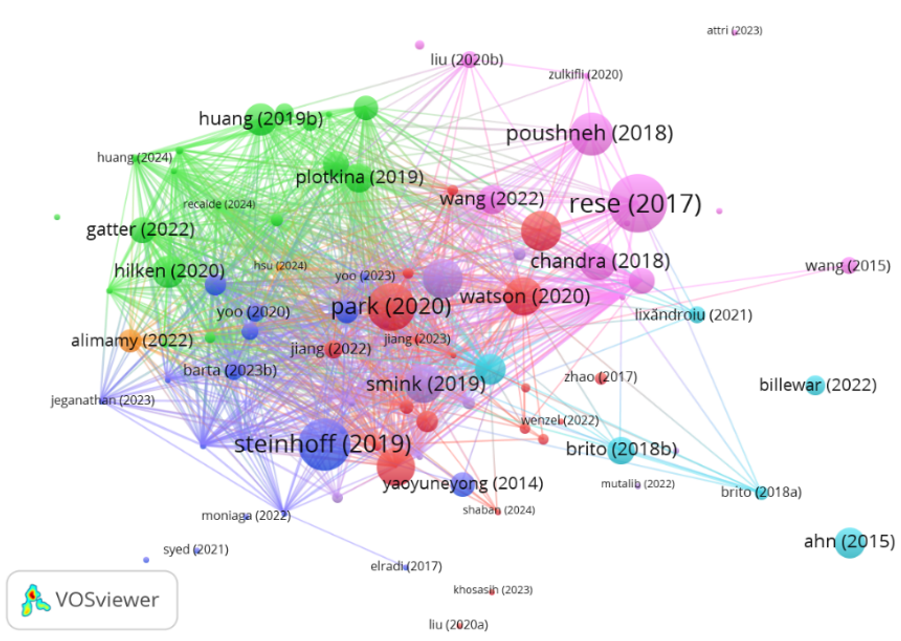
Appendix B. Trends analysis of themes
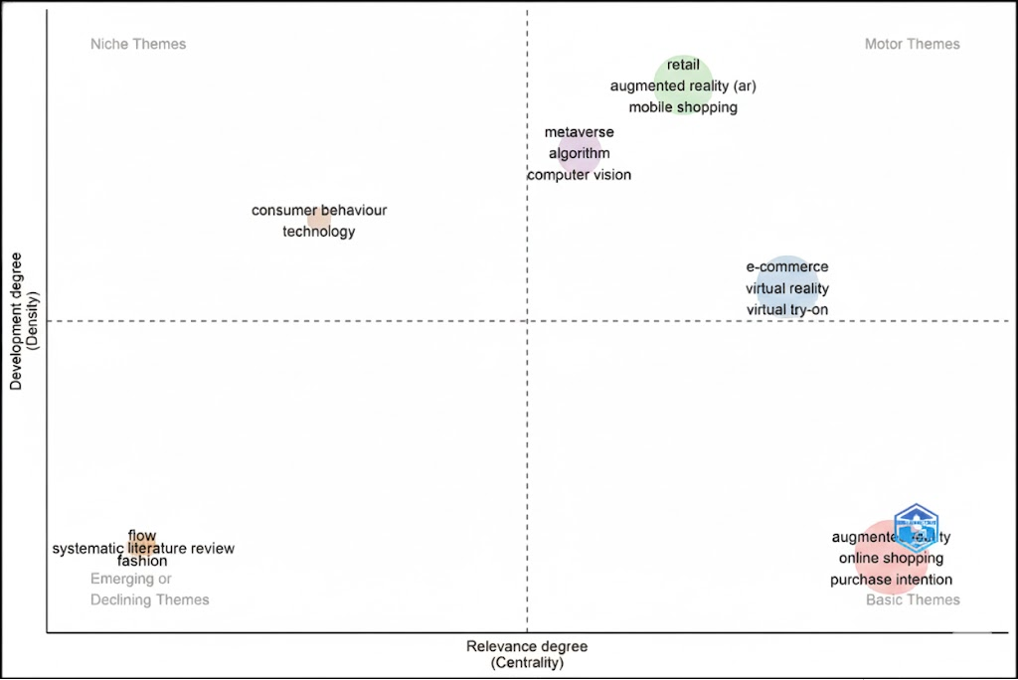
Appendix C. Python code snippets for data cleaning
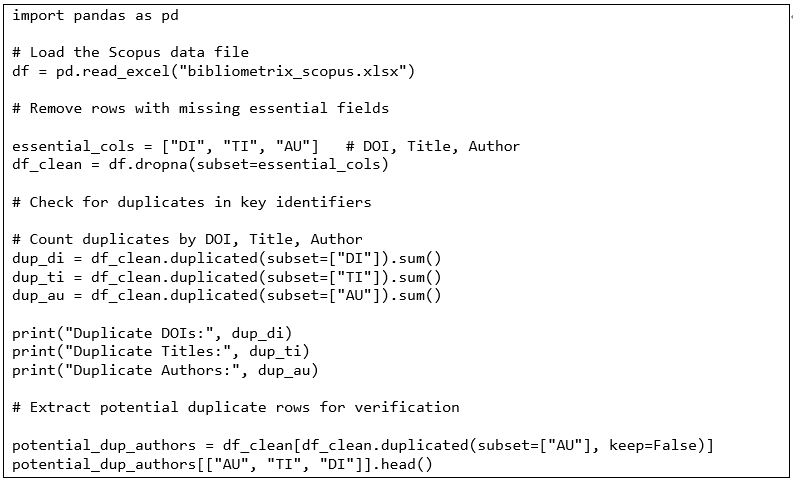





 Views: 1584
 Crossref: 0