
 Open Access
Integrated Posture and Mental Workload Assessment Model for Musculoskeletal Risk Mitigation in Motorcycle Ride-Hailing Operators


 View Full Article|
 Download PDF
Abstract:
Motorcycle ride-hailing workers often operate under prolonged static postures and intense cognitive demands, exposing them to a heightened risk of musculoskeletal disorders. This study proposes an integrated assessment model that combines biomechanical posture analysis and mental workload evaluation to better characterize ergonomic risks in this rapidly expanding occupational sector. Posture was assessed using rapid upper limb assessment (RULA) and rapid entire body assessment (REBA), while cognitive load was quantified through the NASA-TLX technique. A House of Risk (HoR) approach was further employed to prioritize the contributing factors requiring mitigation. Data were collected from 58 ride-hailing motorcycle operators in active service. The results indicated that 72.4% of workers experienced high musculoskeletal risk levels that require immediate intervention, and mental workload scores exceeded overload thresholds in all six NASA-TLX dimensions. Risk prioritization identified inappropriate motorcycle ergonomics and prolonged working hours as the dominant contributors to health impairment. The integrated model provides actionable insights for ergonomic redesign and occupational risk management in informal transportation services. This framework can be adapted to similar gig-economy environments where combined biomechanical and cognitive stressors affect worker safety and performance.
1. Introduction
In the digital era, Gojek has emerged as Indonesia’s first reliable ride-hailing service through its flagship feature, Go-Ride, which dominates the urban transportation market [1], [2], [3]. However, ergonomic risks continuously threaten the health and safety of its drivers [4]. As the backbone of urban mobility, Go-Ride drivers face considerable physical and mental challenges: 68.9% experience time pressure, 66% report mental workload, and 35.9% encounter physical strain. Under high task demands, the mental workload of driving can increase by 6.85 to 21.37 times [5], [6]. Moreover, traffic congestion at two- and four-lane intersections—with vehicle volumes reaching up to 1,628 vehicles per hour, average speeds of 14.2–16.2 km/h, and motorcycle filtering rates between 65.7% and 75.3%—intensifies workload exposure. Prolonged exposure to sunlight and high lateral entropy further exacerbate fatigue, leading to higher traffic violations in urban areas (1523 cases) compared to rural regions (1402), even though safety awareness among drivers remains relatively high [7], [8], [9]. This condition contributed to an increase of 11400 recorded vehicle accidents between 2014 and 2017, as reported by the World Health Organization (WHO) in the Eastern Mediterranean region, a trend that was also observed in Indonesia [10], [11], [12].
Go-Ride drivers in Malang experience intense physical and cognitive strain, often working over 12 hours per day under continuous time pressure and inadequate ergonomic conditions. Prolonged static postures, repetitive trunk movements, and poorly designed motorcycles significantly increase the risk of musculoskeletal disorders and traffic accidents. However, ergonomic evaluations in Indonesia’s ride-hailing sector remain limited, with minimal integration of anthropometric, biomechanical, and psychosocial dimensions. Few local studies examine how age, body size, and driving experience affect risk severity or quantify workload using validated instruments such as rapid upper limb assessment (RULA), rapid entire body assessment (REBA), and NASA-Task Load Index (NASA-TLX). The lack of adaptive, evidence-based interventions aligned with Standar Kompetensi Kerja Nasional Indonesia (SKKNI) No. 318/2024 underscores a systemic gap in occupational safety management. Therefore, developing a holistic ergonomic framework that integrates physical, mental, and psychosocial assessments is essential to establish a safer, data-driven, and sustainable operational model for urban online transportation workers in Indonesia.
This study introduces an intervention framework specifically designed in accordance with the anthropometric profiles and occupational characteristics of Go-Ride online drivers, following the national standard SKKNI No. 318/2024 on Ergonomics, in Malang, East Java. The framework integrates both physical and cognitive analyses to identify musculoskeletal and mental workload risks, thereby avoiding the use of generic, less effective solutions. The developed ergonomic model emphasizes a comprehensive approach that combines postural assessment, cognitive load, and psychosocial factors using RULA and REBA as analytical foundations for systemic intervention design. These interventions include regulated working hours, stress management training, and optimization of the daily work cycle. Furthermore, the model incorporates detailed risk mapping that correlates the severity and frequency of ergonomic hazards to establish targeted mitigation priorities. This approach supports the formulation of nature-based ergonomic facilities as part of a holistic strategy to enhance long-term health and well-being among online drivers. Overall, the proposed model provides both a theoretical and practical foundation for policy formulation and the implementation of adaptive ergonomics interventions within highly dynamic and demanding informal work environments.
This study proposes an adaptive ergonomic intervention model specifically tailored to the anthropometric and psychosocial characteristics of online drivers in Malang, East Java. The model integrates physical posture analysis, mental workload evaluation, and psychosocial assessment to systematically identify and mitigate musculoskeletal and cognitive risks. Grounded in the Indonesian National Competency Standard (SKKNI No. 318/2024), it establishes a scientific framework for informal workers by linking ergonomic indicators to preventive and corrective strategies. The model advances existing literature by combining quantitative risk mapping with adaptive intervention design, enabling precise mitigation of injury and fatigue. Practically, it functions as an engineering-based system to optimize work schedules, implement stress management training, and balance work cycles through time–motion and workload analysis. Overall, this approach offers a replicable, data-driven, and context-specific solution to enhance occupational safety, health, and productivity in Indonesia’s online transportation sector.
2. Literature Review
Drivers reported back pain (67.5%); seat design discomfort showed significant correlation ($p$ $<$ 0.05) with BMI and prolonged driving habits [13]. Low back pain (94.8%); RULA scores 5–7 indicated urgent ergonomic improvements were needed to prevent musculoskeletal disorders [14]. High prevalence in the neck, lower back, and shoulders; Pain score 4.6–6.6. An additional 1 hour of work/week increases the risk of pain (aOR: 1.02–1.03). Unergonomic posture (aOR: 1.64–2.38), repetitive movements (aOR: 2.11–3.16), and motorcycles with clutches and large bags (aOR up to 2.12) have a significant effect on pain [15]. Posture studies using RULA and REBA had an impact on musculoskeletal disorders during work (OR = 2.56; CI: 1.17–5.58), and level 4 (OR = 2.57; CI: 1.08-6.11) indicates a significant risk [16]. Reducing the speed limit from 50–60 km/h to 10–40 km/h can reduce pedestrian and cyclist fatalities by 76% in urban areas and 73% in rural areas [17]. Severity of work zone accidents. Key factors: accident type, speed limit, night/rain time, rear-end collision, and road without a median [18]. The driver’s age, curves of the road, lack of guardrails, and nighttime significantly affect severity. Odds ratio of elderly $>$1.5; Model accuracy 72–75% [19]. Motorcycle involvement increased the risk of severe injury by 30% (OR $\approx$ 1.3), improper seat belts (OR $\approx$ 2.0), fatigue/substance (25–40% increase), young drivers/men ($\approx$20%), and slippery road conditions (15–20%) [20]. Driving experience actually increased the risk of accidents by 67% (OR $\approx$ 1.67, $p$ $<$ 0.01). Aggressive behavior increases with experience; Significant age and sex ($p$ $<$ 0.05) [21]. These risks can be identified with precision using the House of Risk (HoR) as a proposal for appropriate mitigation strategies, with priority preventive actions.
The research gap lies in the lack of integration between ergonomic posture analysis and cognitive workload assessment among informal motorcycle drivers to develop a comprehensive HoR-based risk mitigation model. Existing studies are fragmented, lacking ergonomic standardization, cognitive workload analysis, and integrated risk models combining physical, mental, and environmental factors for Indonesian ride-hailing drivers. This study introduces a data-driven ergonomic model integrating anthropometric, biomechanical, and cognitive factors, aligning with SKKNI No.318/2024 to enhance injury prevention and work sustainability among Go-Ride drivers.
3. Methodology
The design of this study focuses on an explanatory quantitative approach to test the demographics of participation in ergonomics in Go-Ride drivers with preventive measures based on SKKNI No.318/2024 in the field of ergonomics [22], [23], [24]. This approach serves as a solid basis for targeted, evidence-based workload risk mitigation recommendations [25], [26], [27].
The population in this study is Go-Ride online drivers in the Malang transportation sector who have been actively working for the last 1 month [28]. Go-Ride drivers face a high risk of musculoskeletal injury due to prolonged riding, static postures, and delivery time pressure, which affect both physical and psychosocial health. This study focuses on Go-Ride drivers as they depend on working hours, ergonomic rest facilities, and stretching techniques to prevent musculoskeletal disorders. Sampling was conducted systematically using purposive selection. Inclusion criteria included active Go-Ride drivers with at least three months of experience and a minimum of six working hours per day. Through coordination with the Go-Ride driver community in Malang, 58 qualified respondents were obtained. The number of respondents (58) was determined based on the principle of data adequacy and representation of the study population. In qualitative-oriented or small-scale quantitative studies, purposive sampling is appropriate because it focuses on selecting participants who meet specific inclusion criteria—such as actively operating within the urban area, having more than one year of driving experience, and being directly involved in daily transport operations. This ensures that each selected respondent can provide relevant and in-depth information related to the research variables. This purposive sampling method focuses on the most representative respondents to the risks and working conditions of online drivers, so that the data obtained is valid and relevant for ergonomic analysis and musculoskeletal injury prevention [13], [14], [29], [30].
All research activities have been carried out taking into account the ethical principles of research, such as informed consent from respondents, anonymity, and confidentiality of personal data. Respondents were given an explanation of the objectives and benefits of the research, as well as the freedom to participate or not.
The data analysis technique in this study uses quantitative methods with descriptive and inferential approaches [31], [32], [33]. Demographic analysis of participants was carried out descriptively by processing frequency and percentage data for variables of age, gender, weight, height, type of vehicle, and work experience, in order to provide an overview of the basic characteristics of respondents [34], [35]. Mental workload was evaluated using the NASA-TLX instrument, with score and percentage calculations indicating load levels in aspects such as performance, temporal demand, and frustration. Furthermore, an inferential statistical analysis using the Independent Sample t-test was conducted to test the influence of demographic variables (age, weight, height, experience) on workload, with a significance assessment of the $p$-value of $<$0.05 as the basis for hypothesis acceptance [21], [36], [37], [38].
Musculoskeletal complaint analysis was carried out through the Nordic Body Maps method, which maps the distribution of pain locations in respondents descriptively. The work posture risk assessment using the RULA and REBA ergonomic methods provided a risk score classified in the high to very high risk category, supporting a quantitative analysis of the online driver’s working posture conditions [20], [39], [40]. Identify the occupational risk matrix by reviewing occurrence and severity values obtained from the HoR to quantify the risk level of various triggers [41], [42], [43]. Risk mapping techniques combine the evaluation of risk severity and frequency for prioritization of management interventions [44].
$\bullet$ RULA Score [45]
$\bullet$ REBA Score [46]
$\bullet$ NASA TLX [47]
$\bullet$ House of Risk [48]
This formula is used to comprehensively assess the workload and ergonomic risks of online drivers. RULA evaluates the upper and lower body postures to identify potential muscle strain, while REBA assesses the overall body posture by considering load, grip, and the type of activity performed during driving. NASA-TLX is applied to measure the driver’s mental workload, such as stress caused by heavy traffic or time pressure. Meanwhile, the HoR helps identify and prioritize the main sources of risk, enabling the implementation of the most effective preventive actions to keep drivers healthy, safe, and less fatigued.
4. Result and Discussion
The study of Go-Ride online drivers was mostly aged 19–25 years (72.4%), with the majority being male (75.9%). They generally weigh between 50.1–60 kg (51.7%) and are 160.1–169 cm (46.6%) tall. Honda users dominate (81%), and the majority of work experience is between 7–12 months (34.5%) (Table 1).
Category | Frequency | Percentage (%) |
|---|---|---|
Age (Years) | ||
19–25 | 42 | 72.40 |
26–32 | 9 | 15.50 |
33–41 | 3 | 5.20 |
$>$42 | 4 | 6.90 |
Gender | ||
Man | 44 | 75.90 |
Woman | 14 | 24.10 |
Body Weight (kg) | ||
$<$50 | 9 | 15.50 |
50.1–60 | 30 | 51.70 |
61–75 | 14 | 24.10 |
$>$75.1 | 5 | 8.60 |
Height (cm) | ||
$<$160 | 14 | 24.10 |
160.1–169 | 27 | 46.60 |
170–179 | 17 | 29.30 |
Vehicle | ||
Honda | 47 | 81.00 |
Yamaha | 10 | 17.20 |
Suzuki | 1 | 1.70 |
Experience (Month) | ||
0–6 | 17 | 29.30 |
7–12 | 20 | 34.50 |
13–24 | 7 | 12.10 |
$>$25 | 14 | 24.10 |
A study of the workload of Go-Ride online drivers in Malang shows a worrying condition. As many as 42.0% of respondents experienced overload, especially in the aspects of performance (65.5% overload) and temporal (65.5% overload), indicating high pressure related to time and performance demands. Meanwhile, 40.8% are in an underload condition, which has the potential to reduce work motivation. Only 17.2% of respondents were in optimal condition, showing serious imbalances in mental, physical, and emotional workload. These findings reinforce the urgency of the need for workload management interventions to prevent the risk of fatigue and improve driver well-being (Figure 1 and Table 2).
NASA-TLX analysis shows that 81.0% of Go-Ride drivers in Malang are very burdened with performance aspects, followed by frustration (75.9%) and temporal demand (74.1%). The mental, physical, and effort load is relatively lower. These findings confirm that performance and time pressures dominate their work fatigue, requiring immediate treatment priority (Figure 2).


| TLX Dimension | Mean | Std. Deviation | Category |
|---|---|---|---|
| Mental Demand | 72.3 | 10.4 | Overload |
| Physical Demand | 68.7 | 12.1 | Overload |
| Temporal Demand | 70.5 | 9.8 | Overload |
| Performance | 65.4 | 11.7 | Optimal |
| Effort | 69.8 | 10.9 | Overload |
| Frustration | 62.1 | 13.5 | Optimal |
The workload level of Go-Ride drivers in Malang shows critical conditions, with 81.0% experiencing heavy loads in terms of performance, 75.9% in frustration, and 74.1% in temporal demand. This reflects a high urgency for stress management interventions and workload management, as analyzed using normalization of outcomes (Figure 3).
The study found that age, body weight, height, and work experience significantly affect the workload of Go-Ride drivers in Malang (all $p$ $<$ 0.05), indicating that individual characteristics play a crucial role in determining occupational well-being and should be prioritized in ergonomic management (Table 3). All variables demonstrated statistically significant results ($p$ $<$ 0.001). Based on the normality indices ($>$0.05), the data are considered normally distributed, supporting parametric analysis assumptions. Effect size analysis indicates large effects for age, weight, and height, while experience shows a small effect magnitude.
Variable | Group Description | Mean | Standard Deviation (SD) | $\boldsymbol{P}$-Value | Effect Size (Cohen’s d) | Normality Index | Significance Note | Results |
|---|---|---|---|---|---|---|---|---|
Age | Age categories (19–25 to $>$42 years) | 1.47 | 0.883 | 0.000*** | 1.66 (large) | 0.147 | $p$ $<$ 0.05 | Hypothesis accepted |
Weight | Body weight categories ($<$50 to $>$75.1 kg) | 2.26 | 0.828 | 0.000*** | 2.73 (large) | 0.223 | $p$ $<$ 0.05 | Hypothesis accepted |
Height | Height categories ($<$160 to 170–179 cm) | 2.05 | 0.736 | 0.000*** | 2.79 (large) | 0.187 | $p$ $<$ 0.05 | Hypothesis accepted |
Experience | Riding experience (0–6 to $>$25 months) | 0.23 | 1.143 | 0.000*** | 0.20 (small) | 0.096 | $p$ $<$ 0.05 | Hypothesis accepted |
The majority of online drivers experience complaints in the upper neck (89.7%), left shoulder (75.9%), and back (58.6%) due to prolonged static sitting positions. The fewest complaints occur in the legs. This indicates a high risk of musculoskeletal disorders, especially in the upper body and back (Figure 4).
The RULA analysis showed that 56.9% of respondents were at high risk (score 5–6), and 31% were at very high risk (score $\geq$ 7). The average RULA score is 6 (Action Level 3). Meanwhile, the REBA score showed that 58.6% of respondents were at high risk, with an average score of 7 (Figure 5).
Most Go-Ride drivers in Malang are young males (19–25; 72.4%), and body–vehicle mismatch increases musculoskeletal risk. NASA-TLX shows workload imbalance (42% overload; 40.8% underload) and high frustration (75.9%), reflecting mental strain from traffic pressure and platform demands. These patterns align with prior studies linking awkward posture, vibration, and prolonged sitting to neck, shoulder, and back disorders. T-test results ($p$ $<$ 0.001) confirm that age, height, weight, and experience significantly influence workload. Drivers under 160 cm face greater neck–back strain. Nordic Body Map (neck 89.7%; shoulders 75.9%; back 58.6%) and high RULA (5–6) and REBA (7) scores indicate urgent ergonomic risk. Fatigue from long working hours and poor system support further exacerbates these conditions. Although safety awareness is high, urban violations remain higher, indicating a gap between attitude and behavior, consistent with behavioral theory [15]. The discussion should move beyond restating results by explaining causal factors [7], highlighting practical ergonomic interventions, and explicitly comparing findings with prior research [8].
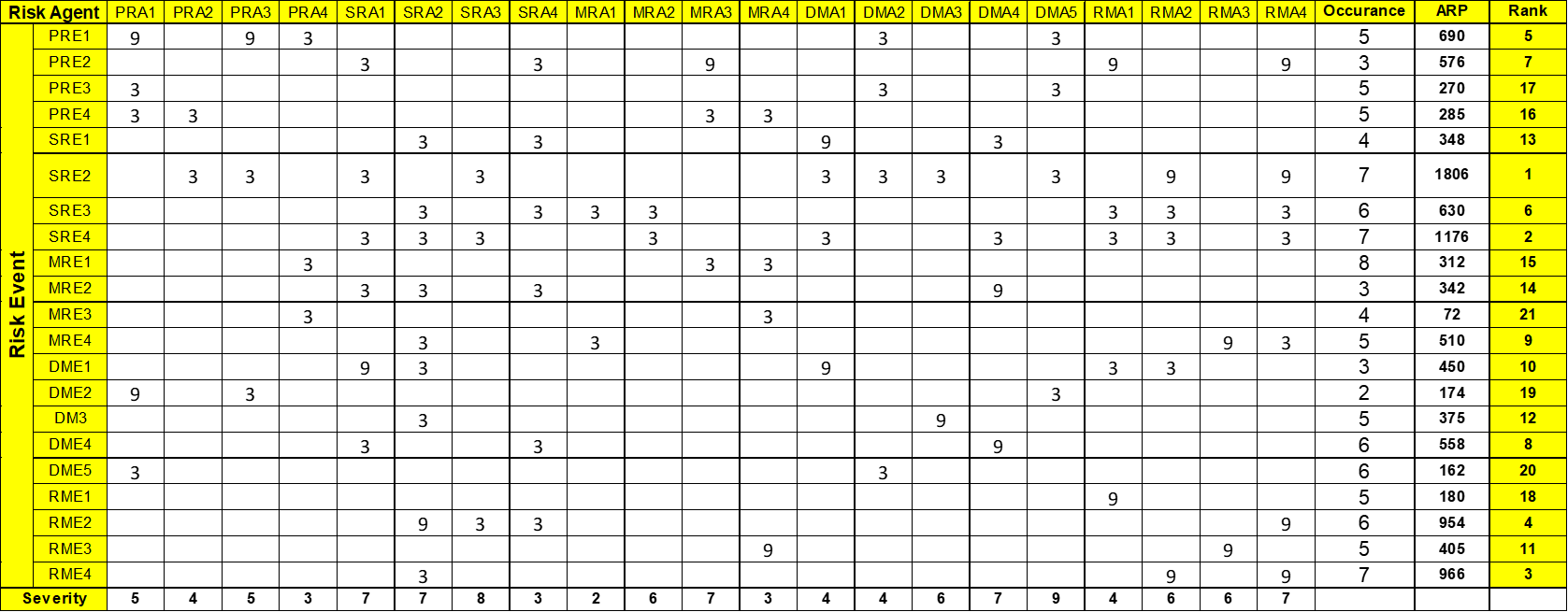
In the source and make activities, significant risks were identified related to driver fatigue and work equipment. One of the most critical risks stems from driver fatigue caused by working more than eight hours without a break (SRE2), which recorded the highest Aggregate Risk Priority (ARP) value of 1806, accounting for 16.1% of the total risk. This condition arises from order target pressure, work schedules that disregard adequate rest periods, and the absence of a maximum working hours policy (SRA2). Additionally, non-ergonomic vehicles (SRE4), with an ARP value of 1176 (26.5% cumulative), exacerbate poor driving posture due to vehicle designs that fail to support ergonomic comfort. Other risks were also detected during delivery and return processes, such as overloading goods beyond capacity (DME4) and insufficient rest facilities (RME4), which led to forced postures and a higher likelihood of musculoskeletal disorders. Overall, most of the identified risks are associated with the lack of systemic support and ergonomic infrastructure, including unresponsive digital applications, poorly designed vehicles, and an unfriendly work environment for online drivers.
These findings underscore the need for risk mitigation strategies focused on enhancing information systems, regulating working hours, improving vehicle ergonomics, and providing ergonomics-based training to reduce RULA and REBA scores in daily operations. Furthermore, the results align with the safety variable in accident risk mitigation, which showed significant effects, with $\beta$ values ranging from 0.325 to 0.903 and $p$-values $<$ 0.001. The perceived behavioral control construct (CON3) demonstrated a $\beta$ coefficient of 0.903 and an $R^2$ of 0.816, indicating a very strong influence, as individuals perceived themselves capable of controlling accident risks by investing in safety equipment.
Positive attitudes towards the purchase of safety devices (ATT1–ATT5) had a $\beta$ between 0.325 and 0.531 with $R^2$ between 0.282, indicating that awareness and social support play an important role in risk mitigation. Behavioral intent (INT1–INT3) was also strong, with $\beta$ 0.533 to 0.648 and $R^2$ of 0.419, indicating a strong intent to purchase safety devices. Overall, the model fits with a chi-square of 95,649 (df 28, $p$ $<$ 0.001), RMSEA 0.046, and CFI 0.945, confirming the validity of the results as an effective accident risk mitigation strategy [49].
This risk mapping shows the relationship between severity and frequency of occurrence. Risks of high severity, such as DME1 and SRE2 at severity 8 and occurrence 6–7, indicate serious risks that are quite frequent and require priority attention. Other risks, such as DME4, SRE4, and RME4, are at severity 6 with varying frequencies, indicating moderate to severe risks that must be monitored and controlled. Meanwhile, risks of low to moderate severity and frequency, such as PRE1 and MRE1, have relatively smaller impacts, but are still important to monitor so that they do not develop into serious problems. Overall, risks with a combination of severity and high occurrence are the main focus for mitigation measures, while other risks are prioritized according to the level of impact. These findings are due to weekend accidents, motorcycles over 10 years old, rider age (15–20 years, 21–40 years, 61+), dark road conditions without lighting or winding, male gender, as well as rider behaviors such as turning right, failing to maintain lanes, and driving at high speeds, play a significant role in increasing or decreasing the risk of severe injury. The probability of severe injury to riders aged 15–20 years is around 33.4%, old motorcycles are 53.8%, dark conditions are 62.1%, and head-on collisions reach 79.2%. The coefficient and t-statistics show the strength and significance of this relationship, while the AIC and BIC values show that the model is quite good at explaining the data [19].
Drivers working over eight hours without rest face a high injury risk due to fatigue and poor posture. Preventive actions include limiting work to eight hours, ensuring 15-minute breaks every four hours, and providing ergonomic rest facilities. Unergonomic vehicles and a lack of rest areas worsen strain, highlighting the need for proper vehicle standardization, route optimization, and posture training. Prolonged static sitting during congestion and limited ergonomic awareness also raises mild stress levels. Accident risks increase by 31.7% for injuries, with higher rates during morning (2.59%) and daytime (2.32%) peaks. Wet roads raise risks by 8.54%, while high speed limits (50–65 mph) increase accidents by 25%, emphasizing the importance of ergonomic, environmental, and regulatory interventions [18].
The study highlights that stress and conflict management programs (PA5) constitute the top priority in mitigating ergonomic and psychological risks among online drivers, emphasizing the importance of soft-skill–oriented interventions to alleviate both musculoskeletal and mental strain. Work-hour regulation (PA1), limiting driving to a maximum of 8 hours per day with 15-minute breaks every 4 hours, and stress recovery training (PA3) were identified as key strategies for reducing fatigue and enhancing overall well-being. Stretching and posture-adjustment practices (PA6) also play a crucial role in maintaining blood circulation and minimizing injury risks associated with prolonged static postures, while vehicle standardization and route optimization (PA4) contribute to improved ergonomic compatibility and travel efficiency. Statistical analysis further revealed that road type, median type, and the number of lanes significantly affect accident severity, particularly on concrete arterial roads frequented by younger riders, who exhibit a higher fatality risk (approximately 19% among those aged 15–19 using motorcycles under 150 cc). In contrast, barrier medians and multi-lane frontage roads are associated with reduced injury severity, underscoring the critical role of infrastructure design in mitigating traffic-related hazards [44].
5. Conclusions
This study identifies and prioritizes ergonomic preventive measures aligned with SKKNI No.318/2024, emphasizing their role in reducing musculoskeletal injury risks among Go-Ride drivers in Malang. Quantitative analysis revealed that ergonomic rest facilities (ARP = 25.524), working hours management (18.630), and stretching techniques (14.256) were the top preventive priorities, while stress management programs (5.670) showed the weakest implementation, signaling systemic gaps in psychosocial risk prevention. The study found high workload in performance (81%) and frustration (75.9%), with musculoskeletal complaints dominant in the neck (89.7%), shoulder (75.9%), and back (58.6%); RULA/REBA scores averaged 6–7, indicating high ergonomic risk ($>$56%).
These findings contribute to the development of a data-driven ergonomic engineering model integrating anthropometric, biomechanical, and cognitive factors for safer and more efficient work systems. Practically, it provides technical guidance for implementing SKKNI-based interventions, workforce training, and stress management frameworks.
Limited sample and subjective measures restrict generalizability. Objective validation (EMG, sensors, longitudinal trials) is needed to confirm SKKNI-based ergonomic interventions’ causal impact on biomechanical load, cognitive strain, competency improvement, and sustainable occupational safety outcomes.
Future research should broaden the application across industrial sectors, enhance cognitive ergonomics metrics, and validate the effectiveness of SKKNI-based training in improving national ergonomic competency and work sustainability.
Conceptualization, J.H. and J.A.P.; methodology, J.H.; software, J.A.P.; validation, J.H., K.S., and S.A.S.; formal analysis, J.A.P.; investigation, J.A.P.; resources, K.S.; data curation, R.A.; writing—original draft preparation, J.A.P.; writing—review and editing, J.H. and S.A.S.; visualization, R.A.; supervision, J.H.; project administration, J.H.; funding acquisition, K.S. All authors have read and agreed to the published version of the manuscript.
The data used to support the findings of this study are available from the corresponding author upon request.
We sincerely thank our institutions—National Institute of Technology Malang, Institut Teknologi Adhi Tama Surabaya, Sahid University Jakarta, and Institut Teknologi Insan Cendekia Mandiri—for their support, as well as our families for their encouragement.
The authors declare that they have no conflicts of interest.
Appendix 1. Table
Risk Agent | Preventive Action Based on SKKNI No.318/2024 in the field of Ergonomics | ARP | |||||
PA1 | PA2 | PA3 | PA4 | PA5 | PA6 | ||
SRE2 | 3 | 9 | 9 | 1806 | |||
SRE4 | 9 | 1176 | |||||
RME4 | 3 | 9 | 966 | ||||
RME2 | 9 | 9 | 954 | ||||
PRE1 | 9 | 690 | |||||
SRE3 | 9 | 9 | 630 | ||||
PRE2 | 3 | 1 | 576 | ||||
TeK | 18630 | 25524 | 16254 | 16794 | 5670 | 14256 | |
Dk | 3 | 4 | 5 | 4 | 4 | 3 | |
ETD | 6210 | 6381 | 3250,8 | 4198,5 | 1417,5 | 4752 | |
Ranking | 2 | 1 | 5 | 4 | 6 | 3 | |
House of Risk
Gunakan contoh 3 Risk Event:
Risk Event | Severity (Si) |
SRE2 | 9 |
DME4 | 8 |
RME4 | 8 |
Occurrence terhadap Agent SRA2:
Risk Event | $O_{ij}$ |
SRE2 | 4 |
DME4 | 3 |
RME4 | 4 |
Code | Risk Agent | Preventive Action Berbasis SKKNI No.318/2024 bidang Ergonomi | |
SRE2 | Driver fatigue >8 hours without rest → tense muscles, high risk of injury (RULA 5–6, REBA 7–9) | PA1 | Setting working hours according to work risk management competency standards: a maximum of 8 hours/day with a scheduled break of at least 15 minutes every 4 hours. |
PA2 | Provision of ergonomic rest facilities / Forest Healing (nature-based rest rooms, comfortable seating, stretching rooms) according to the standards of a healthy work environment. | ||
PA3 | Regular stress management and muscle recovery training in workers (ergonomics education competencies). | ||
SRE4 | Unergonomic vehicle (seat, handle) → forced posture (RULA 4–5, REBA 6–7) | PA4 | Standardize vehicle selection based on task needs with ergonomic fitting evaluation. And Route optimization with technology-based transportation management systems (competence in the use of ergonomics analysis software and transportation systems). |
RME4 | Lack of rest facilities → drivers lack muscle recovery, increased risk of injury (RULA 5, REBA 7) | PA5 | Stress and conflict management program in the work environment (ergonomics soft skill competency). |
RME2 | Driver fatigue >8 hours → high risk of musculoskeletal injury (RULA 6, REBA 8) | PA6 | Application of stretching techniques and regular changes of position (work posture education competencies). |
PRE1 | Jammed route >4 minutes per 3 m → long static sitting posture (RULA 3–4, REBA 5–7) | PA4 | Standardize vehicle selection based on task needs with ergonomic fitting evaluation. And Route optimization with technology-based transportation management systems (competence in the use of ergonomics analysis software and transportation systems). |
SRE3 | No ergonomics training → poor working posture increased (RULA 4, REBA 5) | PA5 | Stress and conflict management program in the work environment (ergonomics soft skill competency). |
PRE2 | Unpredictable weather >3% of errors → stress & mild muscle tension (RULA 2–3, REBA 4–5) | PA1 | Setting working hours according to work risk management competency standards: a maximum of 8 hours/day with a scheduled break of at least 15 minutes every 4 hours. |
PA2 | Provision of ergonomic rest facilities / Forest Healing (nature-based rest rooms, comfortable seating, stretching rooms) according to the standards of a healthy work environment. | ||
Activity | Risk Event | Kode | Risk Agent | Code |
Plan | Jammed route >4 minutes per 3 m → long static sitting posture (RULA 3–4, REBA 5–7) | PRE1 | Traffic information systems are updated late, lack of real-time data accuracy, and lack of integration with navigation applications | PRA1 |
Unpredictable weather >3% of errors → stress & mild muscle tension (RULA 2–3, REBA 4–5) | PRE2 | Lack of accurate weather prediction tools in the app, outdated historical data-driven weather information | PRA2 | |
Inefficient route plan → drivers spend too long on the road → posture fatigue (RULA 4, REBA 6) | PRE3 | The routing algorithm does not take into account real-time congestion, the lack of alternative route options in the application | PRA3 | |
Late incoming order information >5 minutes → stress waiting, muscle tension increased (RULA 2–3, REBA 3–5) | PRE4 | The driver’s internet network is unstable, the notification system is not responsive | PRA4 | |
Source | Low-maintenance vehicles >1% break down → forced posture and high vibration (RULA 4–5, REBA 6–8) | SRE1 | Irregular vehicle service schedule, inexperienced mechanics, substandard parts | SRA1 |
Driver fatigue >8 hours without rest → tense muscles, high risk of injury (RULA 5–6, REBA 7–9) | SRE2 | Work shift scheduling does not pay attention to rest time, high order target pressure, no maximum working hours rule | SRA2 | |
No ergonomics training → poor working posture increased (RULA 4, REBA 5) | SRE3 | Absence of posture and ergonomics education programs, minimal socialization of the risk of musculoskeletal injuries | SRA3 | |
Unergonomic vehicle (seat, handle) → forced posture (RULA 4–5, REBA 6–7) | SRE4 | Old model vehicles without ergonomic modifications, lack of vehicle design standards that support driver posture | SRA4 | |
Make | Order error >5% → light stress, non-optimal posture when checking the device (RULA 2–3, REBA 3–5) | MRE1 | Application backend system crashes frequently, manual order validation process is complicated, lacks order confirmation features | MRA1 |
Vehicle selection is not in accordance with the type of order → forced posture, increased muscle tension (RULA 4, REBA 5) | MRE2 | Lack of driver training in choosing vehicles according to the type of order, lack of vehicle recommendation system | MRA2 | |
Communication devices often error → drivers often reach for devices with poor posture (RULA 3-4, REBA 4-6) | MRE3 | Network quality is unstable, apps often freeze, the driver’s smartphone hardware is inadequate 6 GB of RAM < | MRA3 | |
Handling of repetitive orders → tense hand and neck posture (RULA 4, REBA 5) | MRE4 | Lack of speed in the ordering process due to queues at lunchtime | MRA4 | |
Deliver | Accidents .2-.3% → severe muscle trauma & forced posture (RULA 6, REBA 8–1) | DME1 | Damaged and slippery roads, drivers lack safety training, aggressive driving behavior | DMA1 |
Delay >1 minute in 3% of delivery → long sitting posture static & stress (RULA 3–4, REBA 5) | DME2 | Congestion on major routes, lack of real-time traffic information for drivers | DMA2 | |
Customer conflict >5% → psychosocial stress, muscle tension (RULA 2–3, REBA 3–5) | DME3 | Vague communication, unclear return policy, high customer expectations | DMA3 | |
Load of goods exceeds capacity → forced posture and risk of injury (RULA 5–6, REBA 7–8) | DME4 | Lack of standard weight limit of goods, driver accepts weight orders without restriction | DMA4 | |
Waiting time at delivery >1 minute static sitting → poor posture (RULA 3–4, REBA 5) | DME5 | Crowded and difficult to park delivery locations, lack of information from customers | DMA5 | |
Return | Kesulitan parkir >5 menit → gerakan memaksa, postur tidak ergonomis (RULA 3, REBA 4) | RME1 | Limited parking availability at vehicle return point, inadequate parking | RMA1 |
Driver fatigue >8 hours → high risk of musculoskeletal injury (RULA 6, REBA 8) | RME2 | Long work schedule without pause, high order completion target pressure | RMA2 | |
High-frequency passenger pick-up process → poor hand and back posture (RULA 4, REBA 5) | RME3 | Problematic posture | RMA3 | |
Lack of rest facilities → drivers lack muscle recovery, increased risk of injury (RULA 5, REBA 7) | RME4 | No proper rest room, minimal rest time during long shifts | RMA4 |
Ranking | Code | Preventive Action Berbasis SKKNI No.318/2024 bidang Ergonomi |
1 | PA5 | Stress and conflict management program in the work environment (ergonomics soft skill competency). |
2 | PA1 | Setting working hours according to work risk management competency standards: a maximum of 8 hours/day with a scheduled break of at least 15 minutes every 4 hours. |
3 | PA3 | Regular stress management and muscle recovery training in workers (ergonomics education competencies). |
4 | PA6 | Application of stretching techniques and regular changes of position (work posture education competencies). |
5 | PA4 | Standardize vehicle selection based on task needs with ergonomic fitting evaluation. And Route optimization with technology-based transportation management systems (competence in the use of ergonomics analysis software and transportation systems). |
6 | PA2 | Provision of ergonomic rest facilities / Forest Healing (nature-based rest rooms, comfortable seating, stretching rooms) according to the standards of a healthy work environment. |
Appendix 2. Formula
1. $\operatorname{Score}_A(S A)=S_{U A}+S_{L A}+S_W+S_{W T}$
$\bullet Upper Arm = 3$
$\bullet Lower Arm = 2$
$\bullet Wrist = 2$
$\bullet Wrist Twist = 1$
$S A=3+2+2+1=8$
2. $\operatorname{Score}_B(S B)=S_N+S_T+S_L$
$\bullet Neck = 3$
$\bullet Trunk = 3$
$\bullet Leg = 2$
$S B=3+3+2=8$
3. $\operatorname{Adjustment}(A)=S_M+S_F$
$\bullet$ Muscle use = 1
$\bullet$ Force = 1
$A=1+1=2$
4. $R U L A=\frac{S A+S B}{2}+A$
$R U L A=\frac{8+8}{2}+2=8+2=10$
Very High Risk
5. $\operatorname{Score}_A(S A)=S_N+S_T+S_L$
Load exceeds capacity (DME4)
$\bullet$ Neck = 2
$\bullet$ Trunk = 3
$\bullet$ Leg = 2
$S A=2+3+2=7$
6. $\operatorname{Score}_B(S B)=S_{U A}+S_{L A}+S_W$
$\bullet$ Upper Arm = 3
$\bullet$ Lower Arm = 2
$S B=3+2+2=7$
7. $\operatorname{Adjustment}(A)=S_{\text {Load}}+S_{\text {Coupling}}+S_{\text {Activity}}$
$\bullet$ Load = 2
$\bullet$ Coupling = 1
$\bullet$ Activity = 1
$A=2+1+1=4$
8. $R E B A=\frac{S A+S B}{2}+A$
$R E B A=\frac{7+7}{2}+4=7+4=11$
Very High Risk
NASA-TLX
9. $W i \in[0.15], \sum W i=15$
$\bullet$ $W$ = [$3,2,4,1,3,2$]
$\bullet Total = 15$
10. $W W L=\frac{\sum(W i \times R i)}{\sum W i}$
Rating: $R=[80,75,85,60,90,70]$
$WWL$ = $\frac{(3 \times 80)+(2 \times 75)+(4 \times 85)+(1 \times 60)+(3 \times 90)+(2 \times 70)}{15}$
$=\frac{240+150+340+60+270+140}{15}$
$= \frac{1200}{15}$
$=80$
Very High Mental Workload
11. $A R_j=\sum\left(S_i \times o_{i j}\right)$
$AR =(9 \times 4) + (8 \times 3) + (8 \times 4)$
$=36+24+32$
$=92$
12. $R A P_j=A R_j \times P_j$
$\bullet Probability = 0.7$
$RAP = 97 \times 0.7$
$= 64.4$
13. $T E_k=\frac{\sum\left(E_{j k} \times A R_{j)}\right.}{D_k}$
$\bullet Effectiveness = 5$
$\bullet Difficulty = 3$
$TE$ = $\frac{5 \times 92}{3}$
$= \frac{460}{3}$
$=153.3$





 Views: 1164
 Crossref: 0